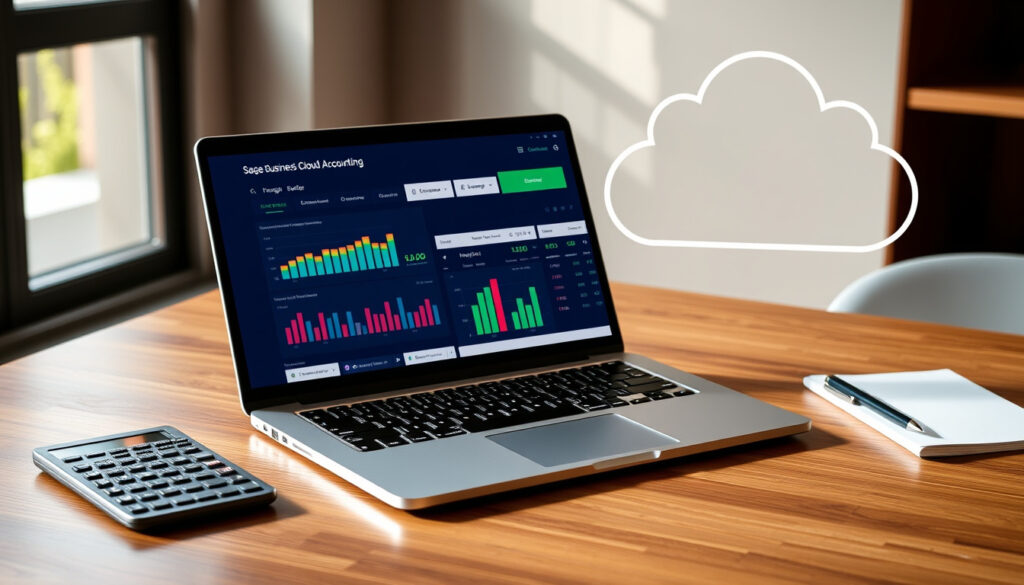
Sage Business Cloud Accounting: Pricing and Features
If you’re a small business owner in Ireland, you’ve probably stared at the two names that keep appearing in every search: Sage and Xero. The decision feels surprisingly slippery, especially when the pricing page seems to change depending on which country site you land on. This guide cuts through the marketing to show what Sage Business Cloud Accounting actually delivers, how it stacks up against Sage 50, and what the real cost looks like after the promotional discounts wear off.
Starting price per month: €3.30 (after 90% off for 3 months) ·
Target business size: 1 to 49 employees ·
Cloud-based: Yes ·
Mobile app: Available ·
Free trial period: 3 months at 90% off
Quick snapshot
- Sage Business Cloud Accounting is the rebranded version of Sage One (Sage official product page).
- Starting price is €3.30 per month at 90% off for the first 3 months (Sage IE pricing page).
- Targets small businesses with 1–49 employees (Sage official product page).
- Whether Sage 50 will be phased out in the future — no official announcement found (Sage 50cloud product page).
- Exact productivity impact of AI automation — no independent data yet (Sage features page).
- Sage One launched as cloud accounting product around 2014 (Wikipedia entry for Sage Group).
- Rebranded to Sage Business Cloud Accounting around 2018 (Sage official product page).
- Current: Sage Business Cloud is the standard cloud offering; Sage 50 remains as separate desktop product (Sage 50cloud product page).
- Expect continued investment in AI features and deeper integration with payroll and payments (Sage features page).
- Competition with Xero and QuickBooks will likely drive more transparent pricing in Ireland (Xero IE Sage alternative page).
| Attribute | Value |
|---|---|
| Product name | Sage Business Cloud Accounting |
| Starting price | €3.30 per month (first 3 months at 90% off) |
| Free trial | 3 months at discounted rate |
| Target users | Small businesses with 1–49 employees |
| Cloud-based | Yes |
| Mobile app | Available (iOS and Android) |
What is Sage Business Cloud Accounting?
Sage Business Cloud Accounting is a cloud-based accounting software designed for small businesses with 1 to 49 employees (Sage official product page). It covers invoicing, bank reconciliation, reporting, and AI-powered data automation — all from a browser or mobile app. The product is the direct successor to Sage One, rebranded when Sage consolidated its cloud offerings under the Sage Business Cloud umbrella.
Key features of Sage Business Cloud Accounting
- Create and send professional invoices with tracking and recurring options (Sage features page).
- Automatic bank feed connection for real-time reconciliation (Sage features page).
- Profit and loss statements, balance sheets, and customizable financial reports (Sage features page).
- AI-powered data extraction from receipts and automatic transaction categorization (Sage features page).
Who is Sage Business Cloud Accounting for?
The software targets sole traders, freelancers, and small businesses that need core accounting without the complexity of inventory management or job costing. It competes directly with Xero Starter and QuickBooks Simple Start, but with a more affordable entry price for single users (Sage official product page).
How does Sage Business Cloud Accounting use AI?
AI features include automatic invoice matching, smart categorisation of bank transactions, and data extraction from uploaded receipts. Sage claims these reduce manual data entry time, though independent benchmarks are not yet available (Sage features page).
The AI automation is a genuine time-saver for repetitive tasks, but the real value depends on how well it handles Irish bank feeds. Users should test the bank connection during the free trial before committing.
What is the difference between Sage 50 and Sage Business Cloud Accounting?
The most fundamental difference is deployment: Sage 50 is desktop-based (with optional cloud access via Sage 50cloud), while Sage Business Cloud Accounting is entirely cloud-native (Sage 50cloud product page).
Deployment: desktop vs cloud
- Sage 50: installed on a local PC or server; data stored locally unless using the cloud add-on.
- Sage Business Cloud: accessed via any browser; data stored in Sage’s cloud servers.
Feature comparison: inventory, job costing, reporting
- Sage 50 includes advanced inventory management and job costing — not available in Sage Business Cloud Accounting (Sage 50cloud product page).
- Sage Business Cloud offers core accounting: invoicing, bank reconciliation, and financial reporting.
- Reporting in Sage 50 is more granular; Sage Business Cloud covers the essentials.
Pricing and scalability differences
- Sage Business Cloud starts at €3.30/month (discounted); Sage 50cloud typically costs €200+ per month when including licence, support, per-user fees, and server costs (Beyond.ie Irish accounting advisory).
- Sage 50 scales to larger teams with more complex needs; Sage Business Cloud is capped at 49 employees.
If you need inventory and job costing, Sage 50 is the only option from Sage. But the total cost of ownership can be 10x higher than the cloud version, making it a poor fit for micro-businesses.
How much does Sage Business Cloud Accounting cost?
Pricing in Ireland is transparent on the official Sage IE page, but the promotional structure can confuse first-time buyers (Sage IE pricing page).
Sage Accounting pricing plans
- Accounting Start: €17 per month plus VAT after promotional period (SoftwareAdvice IE software review platform).
- Accounting: €34 per month plus VAT after promotional period (Sage IE pricing page).
- Accounting Plus: €30 per month plus VAT (UK pricing, exact Irish equivalent may vary) (SoftwareAdvice IE software review platform).
Free trial and discounts
Sage offers a 90% discount for the first 3 months, bringing the entry price to €3.30 per month. After that, standard pricing applies. A 30-day free trial is also available (Sage IE pricing page).
Additional costs for payroll or payments
- Payroll add-on: from €1.40 per month per employee (starting at 5 employees) (Sage IE pricing page).
- Payment processing via Stripe: transaction fees apply.
The promotional pricing is steeply discounted, but the full price for the Accounting plan (€34/month) is higher than Xero’s Starter plan at $29/month (€26 approx). Irish businesses should compare the total cost including VAT and currency conversion.
Is Sage Business Cloud the same as Sage One?
Yes — Sage Business Cloud Accounting is the direct rebranding of Sage One. The product itself didn’t change; only the name and the platform portal (Sage official product page).
History of the Sage One to Sage Business Cloud rebranding
- Sage One launched around 2014 as a cloud accounting product (Wikipedia entry for Sage Group).
- In 2018, Sage consolidated its cloud products under the Sage Business Cloud brand, renaming Sage One to Sage Business Cloud Accounting.
Impact on existing Sage One users
Existing Sage One users were migrated to the new platform automatically. Login credentials, data, and subscription history carried over (Sage official product page).
Current product name and availability
Sage Business Cloud Accounting is the only name used for new sales. Sage One is no longer available as a separate product.
Which is better, Xero or Sage Business Cloud Accounting?
Both are excellent cloud accounting platforms, but they serve slightly different profiles of small businesses. Here’s a head-to-head comparison based on official Irish pricing and features.
Three plans, one clear difference: Sage wins on price for single users, while Xero wins on multi-user scalability.
| Feature | Sage Business Cloud Accounting | Xero |
|---|---|---|
| Starting price (after promo) | €17/month (Accounting Start) | $29/month (Starter) – approx €26 |
| Promotional offer | 90% off for 3 months | First 3 months at reduced rates ($5.80–$15) |
| User limits | 1 user per plan (additional users not available on basic plans) | Unlimited users on all plans |
| Bank reconciliation | Yes | Yes |
| Invoicing | Yes | Yes |
| Payroll integration | Add-on (€1.40/employee) | Add-on (Gusto in US, local partners in IE) |
| Mobile app | iOS and Android | iOS and Android |
| App ecosystem | Limited (Sage Marketplace) | 800+ integrations |
| AI features | Receipt scanning, auto-categorisation | Bank transaction suggestions, expense claims |
| Customer support | Phone, chat, and knowledge base | Email, phone, and community forum |
Sources: Sage pricing from Sage IE pricing page; Xero pricing from Xero IE pricing plans page; feature details from Capterra Ireland software review platform and GetApp Ireland software review platform.
Pricing comparison
- Sage is cheaper for a single user: €17 vs Xero’s $29 (~€26) after discounts.
- Xero’s unlimited user model means growing teams pay the same per plan, while Sage charges per user.
Feature comparison: user limits, integrations, reporting
- Both handle invoicing, bank reconciliation, and basic reporting equally well.
- Xero has a much larger app marketplace, making it more flexible for specialised needs.
- Sage’s AI features are newer but less mature than Xero’s bank rules engine.
Ease of use and customer support
- Both are intuitive; reviews on SoftwareAdvice IE software review platform rate Sage 4.2/5 for ease of use.
- Xero scores slightly higher on user satisfaction, but Sage offers direct phone support in Ireland.
For a sole trader or micro-business, Sage is the cheaper option. For a growing team with multiple users, Xero’s unlimited user model and larger app ecosystem make it the stronger long-term choice.
Specifications: Sage Business Cloud Accounting
Six specifications that define the product’s capabilities and limitations.
| Specification | Details |
|---|---|
| Deployment | Cloud (SaaS) |
| Platforms | Web, iOS, Android |
| Multi-currency | Yes |
| Number of users | 1 per plan (additional users via higher plan) |
| Data backup | Automatic, cloud-based |
| API access | Yes (Sage API) |
| Offline access | Limited (mobile app for basic functions) |
| Supported countries | Ireland, UK, US, Canada, Australia and more |
| VAT filing | Yes (ROS compatible in Ireland) |
| Free trial length | 30 days (or 3 months at 90% off) |
Sources: Sage features page and Sage IE pricing page.
Pros and cons of Sage Business Cloud Accounting
Upsides
- Low entry price with promotional discount
- Easy to set up and use
- Built-in bank feeds for Irish banks
- AI-powered receipt scanning reduces manual data entry
- Integrated payroll add-on
Downsides
- Limited to 1 user on basic plans
- No inventory management or job costing
- Smaller app ecosystem than Xero
- Pricing after promotion is not the cheapest
- Some features (like payroll) are add-ons with extra cost
Timeline: The evolution of Sage Business Cloud Accounting
- 2014 (approx.): Sage One launched as a cloud accounting product (Wikipedia entry for Sage Group).
- 2018 (approx.): Sage One rebranded to Sage Business Cloud Accounting as part of the Sage Business Cloud platform (Sage official product page).
- Current: Sage Business Cloud Accounting is the standard cloud offering; Sage 50 remains as a separate desktop product (Sage 50cloud product page).
Clarity: What we know and what’s still uncertain
Confirmed facts
- Sage Business Cloud Accounting is the current cloud accounting product from Sage.
- Starting price is €3.30 per month after discount.
- Sage One has been rebranded to Sage Business Cloud Accounting.
- Users can migrate from Sage One seamlessly.
What’s unclear
- Whether Sage 50 will be phased out in the future – no official announcement found.
- Exact percentage of AI automation impact on user productivity – no independent data.
- Long-term pricing stability after the promotional period – prices may change.
Expert perspectives
“Sage Business Cloud offers everything for managing accounting, payroll, payments, and your people.”
— Sage official website (Sage official product page)
“Sage pricing in Ireland is not always listed transparently online, making it hard for small businesses to compare directly.”
— Vendors.ie Irish business directory (Vendors.ie)
Summary
Sage Business Cloud Accounting is a capable, affordable entry point for Irish micro-businesses, especially sole traders who don’t need multi-user access or complex inventory. Its promotional pricing is genuinely attractive, but the full monthly cost after three months — €17 to €34 — puts it in the same bracket as Xero, which offers unlimited users and a deeper integration ecosystem. For Irish small business owners, the choice is clear: if you’re a single user on a tight budget, Sage gives you the best value right now. If you’re planning to grow your team or need specialised apps, Xero’s flexibility makes it the safer long-term bet.
For businesses evaluating their options, alternative accounting solutions provide a useful comparison of features and costs across major platforms.
Frequently asked questions
How do I log in to Sage Business Cloud Accounting?
Visit Sage Business Cloud Accounting login page and enter your email and password. If you were a Sage One user, use your existing credentials.
Is Sage Business Cloud Accounting available in Ireland?
Yes, Sage has a dedicated Irish site with Irish pricing, VAT support, and ROS-compatible filing (Sage IE official product page).
Does Sage Business Cloud Accounting have a mobile app?
Yes, the app is available for iOS and Android, allowing invoicing, bank reconciliation, and expense tracking on the go.
What is Sage 50 Cloud?
Sage 50 Cloud (also called Sage 50cloud) is a hybrid version of the desktop Sage 50 that syncs with the cloud for remote access, but it is a different product from Sage Business Cloud Accounting (Sage 50cloud product page).
How do I migrate from Sage One to Sage Business Cloud?
Existing Sage One users were automatically migrated to the new platform. If you still have access to Sage One, contact Sage support to complete the transition.
Does Sage Business Cloud Accounting support multiple currencies?
Yes, it supports multi-currency invoicing and bank accounts, useful for Irish businesses trading internationally.
Can I use Sage Business Cloud Accounting for payroll in Ireland?
Yes, the payroll add-on is available and supports Irish payroll requirements, including RTI submissions. Starting at €1.40 per employee per month (Sage IE pricing page).
More related posts
 Villeroy and Boch Ireland: Stockists, Outlet & Online Guide
 Dyson Airblade V Hand Dryer: Specs, Price & Review (Ireland 2025)
 What Time Can I Buy Alcohol Today? Ireland Hours
 Cast of The Ex-Wife: Seasons 1 & 2 Full Cast
 Glow For It Lash Serum – Prostaglandin-Free Results Examined
 Breaking News Romania: Latest Headlines and Updates
 Best Bicycle Shop Near Me in Dublin | Find Local Bike Shops
