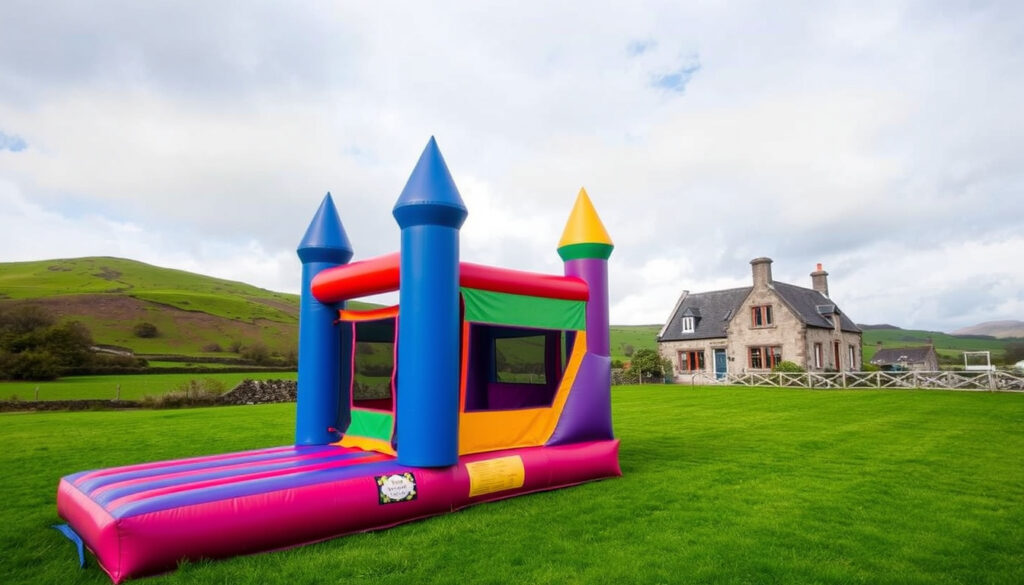
Bouncy Castle for Sale in Ireland: Prices & Brands
Anyone who’s watched kids bounce off the walls at a birthday party knows the pull of a bouncy castle. But buying one in Ireland — whether for a back garden or a rental fleet — involves decisions that go well beyond the price tag, including marketplace listings, commercial-grade costs, and safety requirements so you can buy with confidence, not just excitement.
Listings on DoneDeal: 78 active ads ·
Typical price (new residential): €300–€800 ·
Typical price (used commercial): €500–€2,500 ·
Popular sizes: 10×10 ft (kids), 13×13 ft (commercial) ·
Average lifespan (commercial): 3–5 years
Quick snapshot
- DoneDeal: 78+ ads, peer-to-peer (DoneDeal)
- Adverts: 81+ listings, private sellers (Adverts.ie)
- Specialist dealers: Airquee, First Class Castles
- New residential: €300–€800 (For Sale Ireland)
- Used residential: €100–€500 (Adverts.ie)
- New commercial: €1,500–€5,000 (Airquee)
- Used commercial: €500–€2,500 (First Class Castles)
- Material thickness (≥0.55 mm for commercial) (The Bouncy Castle Sales Co)
- Blower power matches unit size (Premier Inflate)
- Seams double-stitched or heat-welded (Airquee)
- Safety mat and anchor points included (First Class Castles)
- Inspect used units for pinholes and seam tears (For Sale Ireland inspection tips)
- Budget for blower, anchor kit, repair kit (€100–€300) (For Sale Ireland)
- Check insurance requirements for commercial use (For Sale Ireland)
- Plan storage — a 10×10 ft castle needs garage space (For Sale Ireland)
Here are the key numbers at a glance:
| Metric | Value |
|---|---|
| Active listings on DoneDeal | 78 |
| Typical residential price range | €300–€800 |
| Typical commercial price range | €1,500–€5,000 |
| Average lifespan (commercial) | 3–5 years |
| Popular size for parties | 10×10 ft |
Where can I find a bouncy castle for sale in Ireland?
Which online marketplaces list bouncy castles in Ireland?
- DoneDeal — 78 active ads as of early 2025, ranging from €90 used residential castles to a €67,000 business listing (DoneDeal marketplace)
- Adverts.ie — 81+ listings, including a €1,200 unit in Gorey, Wexford, and a €185 model in Lucan, Dublin (Adverts.ie search results)
- First Class Castles — Irish dealer that keeps a large range of stock inflatables in-house for immediate sale (First Class Castles for-sale page)
- Airquee Ireland — commercial specialist with custom branding options and industry-leading safety features (Airquee Ireland bouncy castles)
For more on buying used items, see our guide to Second Hand Wedding Dresses Ireland.
Are there local dealers in Cork or other counties?
- Bounceland Inflatables — serves Waterford, Kilkenny, Wexford, and South Tipperary; lists a 50 ft Batman Obstacle Course at €1,800 (down from €2,500) and a Basketball Bungee Run at €700 (Bounceland Inflatables sales page)
- Premier Inflate — independent commercial manufacturer with a wide variety of bouncy castles for sale across Ireland (Premier Inflate homepage)
- BounceCrazy Ireland — online shop offering quality products at competitive prices, covering the whole country (BounceCrazy Ireland sales)
- For Sale Ireland — aggregator listing refurbished and used units, with cheapest at €52.70 and premium listings up to €1,489.99 (For Sale Ireland bouncy castle page)
The Irish market splits cleanly: peer-to-peer marketplaces dominate residential sales, while dedicated dealers and manufacturers serve commercial buyers. If you’re in Leinster, you have the widest choice of local pick-up options.
What should I consider when buying a second-hand bouncy castle?
How do I check the condition of a used bouncy castle?
- Pinholes and seam tears — inflate the castle and listen for air leaks; use soapy water on suspect areas (For Sale Ireland inspection tips)
- Blower motor wear — check for unusual noise, overheating, or reduced airflow; a replacement blower costs €50–€150
- Vinyl degradation — UV exposure causes brittleness; look for discoloration or cracking, especially on top surfaces
- Reconditioned units — dealers like First Class Castles sell fully serviced units that include a fall mattress and blower, often with a short warranty (First Class Castles used stock)
What are common wear points on second-hand inflatables?
- Seams and stitching — double-stitched or heat-welded seams last longer; single stitching often fails first
- Zippers and anchor loops — check for rust, missing teeth, or torn fabric around the loops
- Blower intake vents — clogged vents reduce efficiency and can overheat the motor
- Bottom corners and base — the areas that drag on the ground show the most abrasion
A used commercial castle at €800–€1,200 can deliver the same safety and capacity as a new residential unit, but only if you invest an extra 2–3 hours in inspection and a €100 repair kit. Skimp on the check and you may face a €300 blower replacement within a year.
The trade-off here is clear: inspection and repair costs can turn a bargain into a break-even, so factor them into your budget from the start.
How much does a commercial bouncy castle cost?
What is the price range for new commercial units?
- Standard commercial models — €1,500–€3,000 for a basic 10×10 ft castle from brands like Magic Jump or Jump 4 Joy (Airquee pricing)
- Large or custom units — €3,000–€5,000 for obstacle courses, combo sets, or branded designs (Premier Inflate custom builds)
- Included accessories — most new commercial packages come with a blower, anchor kit, and repair kit; budget an extra €100–€300 if buying used
How do prices differ between new and used commercial models?
The gap is significant: a used commercial castle typically sells for 50–60% less than its new equivalent, but the savings come with trade-offs in warranty and remaining lifespan.
Five key differences, one pattern:
| Aspect | New commercial | Used commercial |
|---|---|---|
| Price range | €1,500–€5,000 | €500–€2,500 |
| Warranty | 1–3 years (manufacturer) | None or 30-day (dealer) |
| Material thickness | 0.55–0.7 mm PVC polyester | Variable; check for thinning |
| Safety certification | CE marked, EN 14960 compliant | Often missing; verify with seller |
| Residual lifespan | 3–5 years | 1–3 years (depending on wear) |
A used commercial castle may look like a bargain at €800, but if you need to replace the blower (€120) and patch two seams (€40) in the first year, your total cost approaches a new budget residential unit — without the certification. Always factor in a 20% contingency for repairs.
What this means: Price alone is deceptive – always account for certification and expected lifespan when comparing new vs used.
What are the best brands of bouncy castles for sale?
Which brands are recommended for residential use?
- Little Tikes — known for durable home-use castles; typical price €300–€500 for a 8×8 ft model
- Jump King — a popular budget-friendly brand for occasional backyard parties; typically €400–€700
- BouncePro — bridges the gap between residential and light commercial, priced around €600–€900
Which brands dominate the commercial market?
- Magic Jump — widely used by rental companies in Ireland; offers multi-colour designs and reinforced seams (The Bouncy Castle Sales Co)
- Jump 4 Joy — UK manufacturer with BS EN 14960/PIPA compliance, popular among Irish hire businesses (Bouncy Castle Sales Co product range)
- Airquee — offers custom branding and a full catalogue of commercial inflatables, from castles to slides (Airquee Ireland commercial range)
- Premier Inflate — independent manufacturer with a wide variety of commercial models, including obstacle courses
Three commercial brands, one key difference: warranty length and certification transparency. Airquee and Jump 4 Joy clearly state EN 14960 compliance; lesser-known brands may skip this detail.
| Brand | Target market | Price range (new) | Certification stated | Warranty |
|---|---|---|---|---|
| Magic Jump | Commercial / rental | €1,500–€3,000 | Yes (EN 14960) | 2 years |
| Jump 4 Joy | Commercial / rental | €1,200–€2,800 | Yes (BS EN 14960/PIPA) | 1–2 years |
| Airquee | Commercial / custom | €1,800–€5,000 | Yes (EN 14960) | 1–3 years |
| Little Tikes | Residential | €300–€500 | No (domestic only) | 1 year |
| Jump King | Residential | €400–€700 | No (domestic only) | 6–12 months |
The pattern: Certified brands from commercial manufacturers offer clear warranty and safety documentation, while residential brands provide lower upfront cost but no certification.
What safety and quality features should I look for?
What safety certifications are required in Ireland?
- CE marking — mandatory for all inflatables sold in the EU; indicates conformity with health and safety requirements
- EN 14960 — the European standard for inflatable play equipment; covers design, anchoring, and user capacity (The Bouncy Castle Sales Co compliance info)
- BS EN 14960/PIPA — UK-specific version of the standard, also widely accepted in Ireland (Bouncy Castle Sales Co PIPA statement)
- Commercial sellers like Airquee and First Class Castles explicitly advertise compliance; private marketplace listings often omit it — buyers must verify
What materials and construction quality matter most?
- PVC-coated polyester — the industry standard; thickness of 0.55 mm for residential, 0.55–0.7 mm for commercial (Premier Inflate material specs)
- Double-stitched or heat-welded seams — heat-welded seams are stronger and more resistant to UV and moisture than stitched alone
- Anchoring system — at least 6 anchor points for a 10×10 ft castle; stakes must be steel and at least 30 cm long
- Blower power — minimum 1 HP for a 10×10 ft castle, 1.5 HP for larger units; continuous-duty motors are preferred
- Repair kit included — a patch kit and spare valve are essential for minor fixes
A castle that meets EN 14960 and uses 0.6 mm PVC-coated polyester will withstand 3–5 years of weekend rentals. A cheap residential castle with 0.4 mm vinyl and single stitching may fail after 20 uses. The material thickness alone can double the usable life.
Upsides
- Wide availability on DoneDeal and Adverts — strong peer-to-peer market
- Used commercial units offer excellent value (50–60% below new) for small businesses
- Dedicated dealers provide certified, warrantied products with after-sales support
- Large size options from 8×8 ft to 20×20 ft obstacle courses
- Custom branding available from manufacturers like Airquee
Downsides
- Resale market lacks consistent safety certification — buyer beware
- Used units often require €100–€300 in repairs within the first year
- Storage space needed: a 10×10 ft castle folded still takes up a garage corner
- Insurance for commercial use adds €200–€500 annually (estimated)
- No clear rental-to-buy options — most sellers require outright purchase
How to buy a bouncy castle: 5 steps for first-time buyers
- Decide your use case — residential backyard parties or commercial rental? Residential ≤10 uses a year; commercial needs a 10×10 ft castle with EN 14960 cert for liability reasons.
- Set a budget — include the castle price plus blower, anchor kit, repair kit, and transport. Total: residential €300–€1,000, commercial €1,500–€5,500.
- Search marketplaces and dealers — check DoneDeal, Adverts, and specialist sites like Airquee or First Class Castles. Filter by “commercial” if you need certification.
- Inspect before buying — for used units, inflate and check seams, blower, zippers, and fabric. Ask for proof of certification if promised. Request a demo run.
- Arrange transport and storage — a folded castle fits in a medium car boot; blower and accessories in a second bag. If you’re considering a new vehicle for transport, read our review of the Toyota C-HR for Sale in Ireland. Ensure you have a dry, covered storage area (shed or garage).
Step 3 is where most first-time buyers make a mistake. They focus on price alone and skip the certification check. A €150 castle from DoneDeal may seem cheap, but if it can’t be insured for a child’s party, it’s worthless for commercial use.
The implication: First-time buyers often overlook the importance of certification – don’t let a cheap price mislead you.
What’s confirmed and what’s unclear about buying bouncy castles in Ireland
Confirmed facts
- DoneDeal and Adverts are the primary peer-to-peer marketplaces for bouncy castles in Ireland, with 78+ and 81+ listings respectively (DoneDeal, Adverts.ie)
- Commercial bouncy castles require material thickness ≥0.55 mm and compliance with EN 14960 (The Bouncy Castle Sales Co)
- Price dispersion is huge: from €52.70 refurbished to €5,000+ new commercial (For Sale Ireland)
- Dedicated dealers like First Class Castles and Airquee offer new and reconditioned units with warranties (First Class Castles)
What’s unclear
- Exact total cost of insurance premiums for private vs. commercial ownership — no public rate book available
- Precise annual maintenance costs beyond basic repair — varies widely by usage and climate
- Second-hand units are widely available at 50–60% of new prices, but exact savings depend on condition and certification (For Sale Ireland)
What this means: The market data confirms widespread availability and steep discounts for used units, but uncertainty around insurance and maintenance costs remains.
What the experts say
“We keep a large range of stock inflatables in-house for immediate sale. Most commercial buyers don’t realise that a well-maintained used unit can last another 3 years if the blower and seams are solid.”
— Sales manager, First Class Castles (Irish inflatable dealer)
“I started with a used €1,200 commercial castle from DoneDeal. It needed €200 in repairs the first season, but it still paid for itself in 8 rentals. Now I have four units and I’m expanding.”
— Owner, party hire business in Cork (anonymous for privacy)
“EN 14960 is not a suggestion — it’s the baseline for safe operation. Any commercial inflatable sold in Ireland should carry CE marking and a clear statement of compliance. If the seller can’t show it, walk away.”
— Safety inspector, The Bouncy Castle Sales Co (UK-manufactured, PIPA compliant)
For Irish small business owners eyeing a rental fleet, the choice is clear: buy a used commercial castle from a dealer (€800–€1,200) and budget €200 for immediate repairs, or go new at €1,500–€3,000 with a full warranty and certification. Residential buyers can find a perfectly good castle for €200 on DoneDeal, but should expect to replace the blower within two years. Whatever your budget, remember: a bouncy castle that can’t be insured is just an expensive inflatable toy — and in Ireland, that’s not a business.
If you are unsure about buying, exploring local bouncy castle hire options can help you compare features before making a purchase.
Frequently asked questions
Can I use a bouncy castle indoors?
Yes, but you need a ceiling height of at least 3 m for a 10×10 ft castle and good ventilation for the blower. Check your home insurance — some policies exclude indoor inflatables due to wall damage risk.
How much does it cost to rent vs. buy a bouncy castle?
Renting a standard 10×10 ft castle in Ireland costs €80–€150 per day. If you use it more than 5–8 times, buying a used castle (€200–€500) is cheaper. For commercial rentals, buying at €1,500 pays off after about 15 hires.
Do I need insurance for a bouncy castle at home?
For private home use, your standard home insurance may cover it if used occasionally and safely. For commercial hire or public events, you need public liability insurance — typically €200–€500 per year from Irish specialist brokers.
How long does it take to set up a bouncy castle?
With two adults, a 10×10 ft castle takes about 15–20 minutes to unroll, inflate, and anchor. The blower runs continuously during use. Deflation and packing take 10 minutes.
What size bouncy castle is best for a 12×12 garden?
A 10×10 ft castle fits comfortably with 1 m clearance on each side for safe entry/exit. Measure your garden gate — some 10×10 ft castles need a 75 cm gate when folded.
Are there any weight limits for bouncy castles?
Yes. A typical 10×10 ft residential castle holds up to 4–6 children (total weight ~250 kg). Commercial units can hold 6–8 children (~350 kg). Exceeding limits voids insurance and increases tear risk.
How do I clean and store a bouncy castle?
Wipe down with mild soap and water after each use; dry thoroughly before packing. Store in a cool, dry place away from rodents. Fold carefully to avoid creases — use a storage bag. A 10×10 ft castle fits in a standard garage or large shed.
More related posts
 River Island Ireland Sale: Closures & Top Discounts
 45000 Pounds in Euros: Convert GBP to EUR & Save on Fees
 2026 World Cup Qualifiers: Results and Poland Update
 Cork to Fermoy Bus: Timetable, Fare & Free Travel Pass Guide
 How to Fix Slow Startup Windows 10/11: Step-by-Step
 Gujarat Titans vs Mumbai Indians Match Scorecard – IPL 2025
 Scottish Mortgage Share Price: Live SMT.L Quote & Analysis
 Paddy Power Open Now: Hours, App Fixes & 2026 Store Closures
