Mother’s Day in Ireland 2026: Date, History & Differences
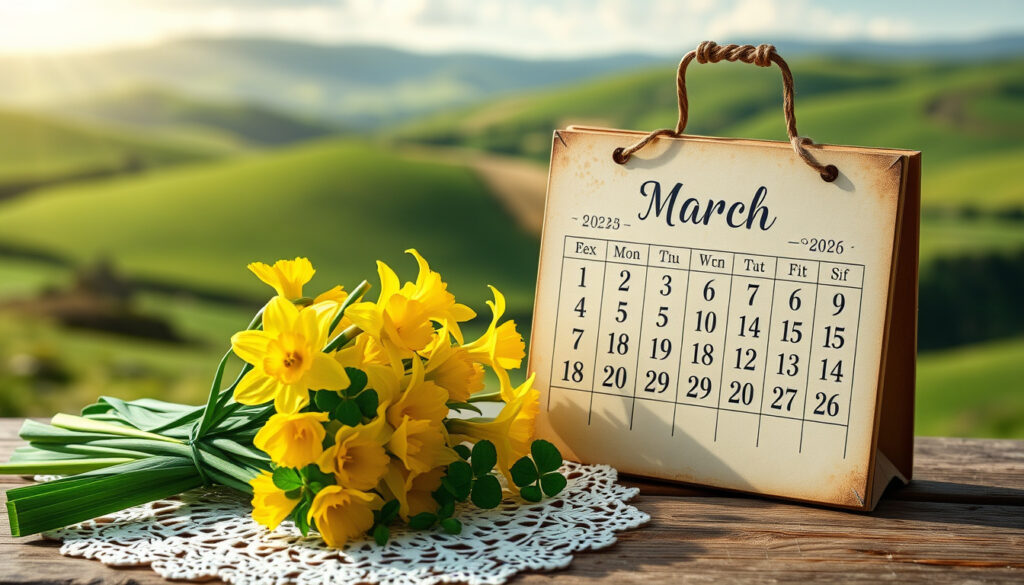
If you’re trying to set a calendar reminder for Mother’s Day in Ireland, you might want to double-check before marking it for May. Ireland celebrates Mother’s Day on the fourth Sunday of Lent, which means the 2026 date falls on March 15 — weeks earlier than most of the world. This timing traces back to a medieval Christian tradition called Mothering Sunday, not the American holiday that took hold in the 20th century.
Mother’s Day 2026 Date: Sunday, March 15 · Traditional Day: Fourth Sunday of Lent · Origin: Mothering Sunday tradition
Quick snapshot
- 2026 falls on Sunday, March 15 (eFlorist Ireland)
- Fourth Sunday of Lent each year (Old Moore’s Almanac)
- Originates from Mothering Sunday tradition (Wikipedia)
- Exact term preference: surveys on “mam” vs “mammy” usage lacking
- Regional variations within Ireland not fully documented
- Middle Ages: Mothering Sunday established
- 1908: American Mother’s Day begins
- Post-WWII: Irish tradition revived
- Irish Mother’s Day 2027: March 7
- UK shares same date with Ireland
| Fact | Detail |
|---|---|
| Official Holiday Status | Not a public holiday |
| 2026 Date | March 15 |
| 2027 Date | March 7 |
| Origin | Fourth Sunday of Lent |
| Popular Gifts | Flowers, Irish jewelry |
| Alternative Names | Mothering Sunday, Simnel Sunday, Refreshment Sunday |
What date is Mother’s Day in Ireland this year?
Mother’s Day in Ireland falls on Sunday, March 15, 2026. This date comes from the Christian calendar — specifically the fourth Sunday of Lent — not a fixed calendar date. In 2027, the observance shifts to March 7 as Lent moves. Since the date depends on when Easter falls, Mother’s Day in Ireland slides between early March and mid-April every year.
Most people in Ireland instinctively refer to this holiday as just “Mother’s Day,” but its original name was Mothering Sunday — and that name carries centuries of meaning that the modern commercial holiday has largely overwritten.
How the Date is Calculated
- Count four Sundays from the start of Lent
- The fourth Sunday is Mother’s Day
- Lent begins on Ash Wednesday, 46 days before Easter
- Easter itself moves between late March and late April
The implication: a holiday most of us mark on autopilot actually shifts by nearly a month across the calendar, making it one of the most variable observance days of the year.
Why is Mother’s Day different in Ireland?
Ireland’s Mother’s Day is different because it traces back to a medieval Christian tradition that has nothing to do with the American holiday popularized by Anna Jarvis in 1908. Mothering Sunday began as a day when people returned to their “mother church” — the main church or cathedral where they were baptized — for a special service. In Ireland and the UK, this tradition never fully switched to the May date.
Lent Tradition vs US May Date
- Ireland and UK: Fourth Sunday of Lent (late February to April)
- US and many European countries: Second Sunday in May
- The two holidays emerged independently and only merged partially in the 20th century
Many people assume Mother’s Day is the same worldwide, but Ireland and the US follow fundamentally different holiday traditions. The American version, championed by Anna Jarvis starting in 1908, became official in 1914 and spread globally — yet Ireland kept its Lenten observance largely intact.
Historical Reasons
The servant tradition shaped everything. During the Middle Ages, children from poor Irish families were sent to work as servants in wealthy homes. Once a year, in the middle of Lent, these servants were given a day off to visit their mother church and then their own mothers at home. They would pick flowers along the way and present them upon arrival — making the flower tradition deeply rooted in Irish Mother’s Day heritage.
The pattern: what began as a religious obligation became a family reunion, then faded when servant culture declined, then revived after World War II with American influence. This layered history explains why Irish Mother’s Day feels familiar to visitors but follows entirely different rules.
What do Irish call their mother?
The most common terms for mother in Ireland are Mam and Mammy — reflecting the distinctive Irish affection for diminutive forms. Unlike American English where “mom” dominates, Irish English preserves a more playful, informal tone in how families address mothers.
Mam vs Mammy
- “Mam” is the everyday term across most of Ireland
- “Mammy” carries deeper emotional resonance — often used by adults even after childhood
- “Mum” appears in Irish English but less frequently than in British English
- “Mom” reflects American influence, seen more among younger urban populations
Regional Variations
Northern Ireland tends toward British influence with “mum,” while southern Ireland predominantly uses “mam.” Rural areas maintain more traditional terms like “mammy” more consistently than cities.
What this means: the affectionate diminutive tradition in Irish Gaelic influenced how English-speaking Irish families address mothers, making “Mam” and “Mammy” distinctly Irish markers rather than simple dialectal variations.
What is Irish Mothering Sunday?
Irish Mothering Sunday is the original name for what is now commonly called Mother’s Day. The tradition dates to the Middle Ages and honored three mothers: the Mother Church, mothers of earthly homes, and the Virgin Mary. This layered religious meaning is why the holiday falls during Lent — a time of spiritual reflection that the church set aside for honoring motherhood.
History and Traditions
- Middle Ages: Day to return to “mother church” where baptized
- Simnel Sunday: Traditional Simnel cakes baked to celebrate family reunions during Lent
- Refreshment Sunday: Relaxation of Lenten vows on this Sunday
- Servant tradition: Children given day off to visit mothers
The Simnel cake tradition reflects how deeply food ties into Irish family celebrations. Unlike commercially produced gifts, a Simnel cake required family effort — flour, marzipan, and tradition baked together before mass.
The pattern: baking traditions anchored the holiday in domestic ritual, creating memories that outlived the original religious context.
Modern Celebrations
Today’s Irish Mothering Sunday combines the old and new. Families gather for Sunday dinners, mothers receive flowers and jewelry, and the religious dimension has largely faded. The secular celebration now dominates, though church attendance on the day remains common in more traditional communities.
The trade-off: commercial influence has made the holiday more festive but less spiritually grounded, similar to how many religious holidays have evolved across Western Europe.
Are there two dates for Mother’s Day?
Yes — and this confusion catches many people off guard. Ireland celebrates Mother’s Day on the fourth Sunday of Lent (March 15, 2026). The US, Canada, Australia, and most other countries celebrate on the second Sunday in May. In 2026, that falls on May 10.
Ireland vs Worldwide
| Country/Region | Date Formula | 2026 Date |
|---|---|---|
| Ireland | Fourth Sunday of Lent | March 15 |
| United Kingdom | Fourth Sunday of Lent | March 15 |
| United States | Second Sunday in May | May 10 |
| Canada | Second Sunday in May | May 10 |
| Australia | Second Sunday in May | May 10 |
| Spain | First Sunday in May | May 3 |
| Nigeria | Fourth Sunday of Lent (unofficial) | March 15 |
The implication: if you have family or business connections across both Irish and American calendars, you may find yourself celebrating twice — once in March and again in May. This dual celebration can create gift-giving fatigue but also doubles the appreciation.
Gift Ideas for Irish Mothers
- Flowers: Classic choice, especially spring blooms
- Irish jewelry: Claddagh rings or Celtic designs from local jewelers
- Simnel cakes: Traditional baked goods from specialty bakers
- Afternoon tea experiences: Popular gift from Irish hotels and spas
Irish mothers receive recognition tied to spring renewal — a meaningful connection that the American May date simply cannot replicate. The Lenten timing adds spiritual weight, while the Celtic traditions give the celebration a distinctly Irish flavor.
Timeline
| Period | Event |
|---|---|
| Ancient Celtic times | Spring festivals honouring Brigid, goddess of fertility and motherhood |
| Middle Ages | Mothering Sunday established as day to return to mother church |
| Late 18th century | Servant tradition dies out |
| 1908 | Anna Jarvis holds memorial, creating American Mother’s Day |
| 1913 | Constance Adelaide Smith revives Mothering Sunday observance |
| By the 1920s | Original Mothering Sunday custom had lapsed in Ireland |
| After World War II | Irish tradition revived with American influence |
| 2026 | March 15 observance |
The pattern: the holiday nearly vanished twice — once when servant culture ended and again when American commercialization spread — yet Irish identity preserved it through both crises.
Clarity on Confirmed Facts
Confirmed
- Date calculation: fourth Sunday of Lent
- 2026: March 15 (verified by eFlorist Ireland and multiple sources)
- Originates from medieval Mothering Sunday tradition
- Shared with UK and parts of Europe
- Simnel Sunday alternative name tied to cake tradition
Unclear
- Exact term preference: “mam” vs “mammy” lacks formal survey data
- Regional celebration variations within Ireland undocumented
- Participation rates or demographic trends unmeasured
Mother’s Day in Ireland is a little different. We celebrate on the fourth Sunday of Lent, which comes from the old Mothering Sunday tradition — something our cousins across the Atlantic don’t really understand until you explain it.
— Ciaran, MyIrishJeweler (custom Irish jewelry specialist)
The revival of Mothering Sunday in 1913 aimed to honour the Mother Church, mothers of earthly homes, the Virgin Mary, and Mother Nature — a broader concept than the modern commercial holiday that followed.
— Historical record, based on Constance Adelaide Smith’s 1913 initiative
Related reading: Our Lady of Lourdes · Best Spa Hotels Ireland
flowers.ie, thebookresort.ie, taylorandgray.ie, discoveringireland.com, calendarific.com, fromyoutome.com, interflora.ie, irishshop.com, officeholidays.com
Ireland celebrates Mother’s Day on the fourth Sunday of Lent, which means it falls on Sunday, March 15 in 2026, differing from the US date.
Frequently asked questions
When is Father’s Day in Ireland?
Father’s Day in Ireland follows the same formula as the US and UK — the third Sunday in June. In 2026, that falls on June 21.
Is Mother’s Day a public holiday in Ireland?
No, Mother’s Day is not a public holiday in Ireland. Businesses and schools remain open, though many families gather for Sunday dinners.
How does UK Mother’s Day compare?
The UK celebrates Mother’s Day on the same date as Ireland — the fourth Sunday of Lent. The tradition and history are identical, rooted in the same Mothering Sunday origin.
What gifts are popular for Irish mothers?
Flowers and Irish jewelry are the most popular gift categories. Claddagh rings, Celtic-inspired pieces, and spring bouquets dominate retail displays. Afternoon tea experiences at hotels also rank highly.
What is the Gaelic word for mother?
The Irish Gaelic word for mother is “máthair.” However, most Irish English speakers use “mam” or “mammy” rather than the Gaelic term in daily conversation.
Does Ireland celebrate American Mother’s Day?
Ireland does not officially celebrate the American Mother’s Day in May, but some commercial retailers promote both dates to maximize sales. Most Irish families observe only the March Lenten date.
More related posts
 Paul Mescal and Gracie Abrams: From Rumors to Red Carpet
 St Mary’s Church Navan – Mass Times, Parish Priest
 39 Inches in CM: Exact Conversion + Size Comparisons
 Scottish Mortgage Share Price: Live SMT.L Quote & Analysis
 Storm Claudia Weather Warning: Where It Hit and Strength
 Permanent TSB Near Me: Find Branches, Hours & Services
 Laurel Hill Secondary School FCJ: Key Facts & Info
