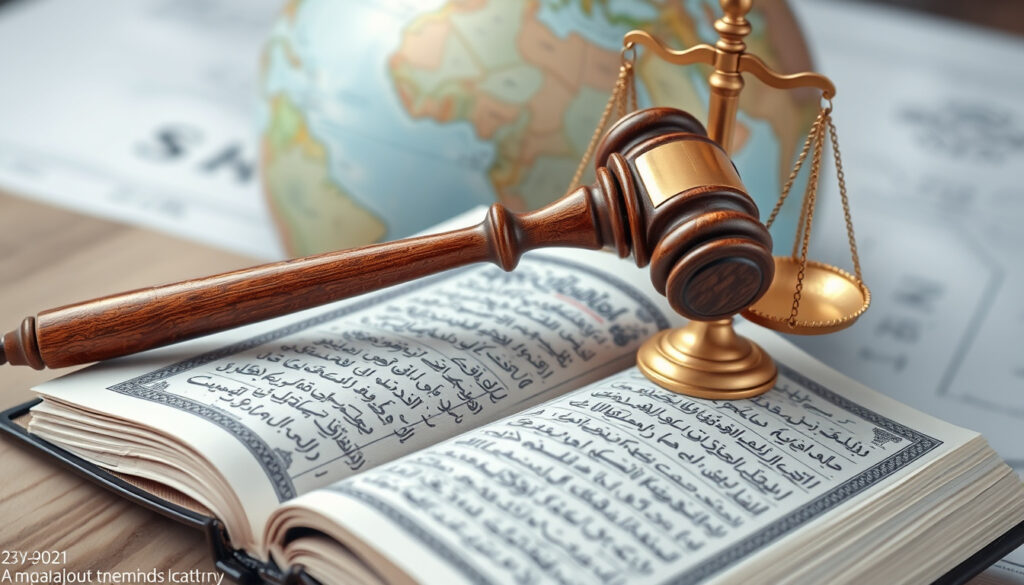
What Is Sharia Law? Rules, Punishments, and Global Impact
Sharia law is a term that often sparks heated debate but rarely comes with a clear explanation. For many, it’s a mysterious set of rules from the Quran; for others, it’s a political flashpoint. But the reality is more nuanced: Sharia is a religious legal framework that guides everything from daily prayer to inheritance, and its application differs dramatically across the world. Approximately 1.9 billion Muslims look to Sharia for guidance, yet no single book codifies it.
Meaning of Sharia in Arabic: The path ·
Primary sources: Quran, Hadith, Ijma (consensus), Qiyas (analogy) ·
Muslims worldwide: Approximately 1.9 billion ·
Countries with Sharia-based criminal law: 10+ (including Saudi Arabia, Iran, Nigeria, Sudan, Malaysia, Afghanistan) ·
Major Sunni schools of law: 4 (Hanafi, Maliki, Shafi’i, Hanbali)
Quick snapshot
- Sharia is derived from the Quran and Hadith (Council on Foreign Relations)
- There are distinct schools of jurisprudence (Hanafi, Maliki, Shafi’i, Hanbali) (Council on Foreign Relations)
- Riba (interest) and gambling are forbidden (Wikipedia)
- Whether a wife can refuse sex (disagreement across schools and scholars) (Fiqhly)
- The specific political structure required by Sharia (monarchy, democracy, caliphate) (Council on Foreign Relations)
- 1979: Iranian Revolution establishes a modern Islamic state enforcing Sharia in criminal law (ARA)
- 2004: Morocco’s Moudawana broadens women’s rights in marriage and divorce (PubMed Central)
- Debates over Sharia bans in Western countries continue to intensify (Council on Foreign Relations)
- Reform movements (e.g., “Sharia light”) push for personal status only, separate from criminal justice (ARA)
Five key facts, one pattern: Sharia is not a monolith—its meaning and rules shift depending on the school of thought, the country, and the era.
The table below distills the core identifiers of Sharia law into a single reference.
| Label | Value |
|---|---|
| Meaning of Sharia in Arabic | The path |
| Primary Sources | Quran, Hadith, Ijma (Consensus), Qiyas (Analogy) |
| Number of Muslims Worldwide | Approximately 1.9 billion |
| Countries with Sharia-Based Criminal Law | Saudi Arabia, Iran, Nigeria, Sudan, Malaysia, Yemen, Afghanistan, Qatar, Mauritania, UAE |
| Major Sunni Schools of Law | Hanafi, Maliki, Shafi’i, Hanbali |
The implication: the same label “Sharia” covers wildly different legal realities depending on where you are.
What is Sharia law in simple terms?
Sharia is the religious law of Islam, derived from the Quran (the holy book) and the Hadith (sayings of the Prophet Muhammad). It is not a single written code but a framework interpreted by scholars over centuries. The word sharia literally means “the way” or “the path” to water in Arabic—a source of life.
According to the Council on Foreign Relations (nonpartisan think tank), Sharia covers worship, morality, family life, business, and crime. There is no single book of Sharia; interpretations vary across four Sunni schools (Hanafi, Maliki, Shafi’i, Hanbali) and the Shia Jafari school.
What are the primary sources of Sharia?
- Quran – The direct word of God as revealed to Muhammad. (Council on Foreign Relations)
- Hadith – Recorded sayings and actions of the Prophet. (Wikipedia)
- Ijma – Consensus of scholars. (Wikipedia)
- Qiyas – Analogical reasoning applied to new situations. (Council on Foreign Relations)
The implication: Sharia is a living tradition, not a static document. Each new generation of scholars debates how to apply these sources to modern life.
What are the main schools of Islamic jurisprudence?
Four Sunni schools (madhahib) dominate: Hanafi (most widespread, used in Turkey, South Asia), Maliki (North Africa), Shafi’i (Southeast Asia), and Hanbali (Saudi Arabia, Qatar). The Shia Jafari school is followed in Iran and parts of Iraq. Each school has its own methodology, leading to different rulings on the same question. For example, the Hanafi school is generally more flexible on contractual matters, while the Hanbali school is more literalist. (Council on Foreign Relations)
What is an example of Sharia law?
A concrete example: under Sharia, a Muslim must pray five times a day (a rule derived from the Quran and Hadith). Another example is the prohibition of riba (interest) in financial transactions, which has led to a global Islamic banking industry worth over $2 trillion. (Wikipedia)
What is forbidden in Sharia law?
Sharia classifies acts into categories: obligatory (fard), recommended (mustahabb), neutral (mubah), disliked (makruh), and forbidden (haram). The most well-known prohibitions are the haram acts.
What are the greatest sins in Islam?
- Shirk – Associating partners with God (the most serious sin).
- Murder – Taking a life unjustly.
- Theft – Taking property without right.
- Adultery – Sexual relations outside marriage.
- Consuming alcohol and pork – Explicitly forbidden in the Quran.
- Riba (usury/interest) – Earning money from money without productive risk.
- Gambling – Games of chance that rely on luck.
These are drawn from the Quran and Hadith, as outlined by Wikipedia.
What are the hudud punishments?
Hudud are fixed punishments for a few specific crimes: theft (amputation of a hand), adultery (stoning or 100 lashes), false accusation of adultery (80 lashes), drinking alcohol (80 lashes), and apostasy (death penalty in some interpretations). However, the evidentiary requirements are extremely strict—four male eyewitnesses to the act of adultery, for example. Historically, hudud penalties were rarely applied because the conditions were so hard to meet. (Council on Foreign Relations)
Hudud punishments often grab headlines, but they account for a tiny fraction of actual Sharia rulings. Tazir crimes (discretionary punishments) are far more common, and judges have wide latitude to tailor sentences.
The trade-off: The strictness of hudud in theory contrasts with its rarity in practice—a gap that is often exploited by critics and defenders alike.
What does Sharia law mean for women’s rights?
Sharia’s treatment of women is one of the most debated topics globally. The framework itself is not uniformly oppressive, but its application in several countries has created severe restrictions.
How many wives can a man have under Sharia law?
A man may marry up to four wives, provided he treats them equally financially and emotionally. This is based on Quran 4:3. However, many scholars argue that the condition of equal treatment is nearly impossible to meet, effectively limiting the practice. (Wikipedia)
Can a wife say no to her husband in Islam?
Scholars disagree. The mainstream view holds that a wife may refuse sex for a legitimate reason (e.g., illness, travel, during menstruation). Some schools allow a general right to refuse, while others emphasize the husband’s right to intimacy. The issue is not settled across all schools. (Fiqhly (Islamic law website))
What rights do women have in Sharia divorce and inheritance?
- Women have the right to own property and keep their earnings. (Fiqhly)
- Marriage contracts can include stipulations, such as the right to divorce (khula). (Number Analytics)
- Inheritance: a daughter typically receives half the share of a son. (Wikipedia)
- Iran is the only country where the hijab is mandatory for all women, including non-Muslims. (ARA (Spanish news outlet))
- Saudi Arabia ended its ban on women driving in 2017. (ARA)
- Morocco’s 2004 Moudawana broadened women’s rights in marriage, divorce, guardianship, and inheritance. (PubMed Central (open-access medical database))
- Indonesia has women serving as judges in Sharia courts. (PubMed Central)
Why this matters: Women’s rights under Sharia are not a fixed set of rules—they are a battlefield where conservative and progressive interpretations clash. The same Quranic verses that some use to justify male guardianship are read by others to support equality.
The same Sharia that allows a woman to keep her wealth and stipulate divorce conditions is also used to justify mandatory hijab and male guardianship. The outcome depends entirely on which scholars and which governments are interpreting the texts.
What does Sharia law say about Christians?
Classical Sharia classified Christians and Jews as “People of the Book” (Ahl al-Kitab) who received earlier revelations from God. This status granted them certain protections but also second-class citizenship.
Who qualifies as a ‘People of the Book’?
Jews, Christians, and Sabians (a pre-Islamic monotheistic group) are traditionally considered People of the Book. Some modern scholars also include Zoroastrians, Hindus, and Buddhists, but that is a minority view. (Wikipedia)
What is a dhimmi?
Dhimmi was the legal status granted to non-Muslims under Islamic rule. It allowed freedom of worship and legal autonomy in personal matters (marriage, divorce, inheritance) in exchange for paying the jizya tax and accepting Muslim political sovereignty. Historically, the condition varied widely—from tolerance in Muslim Spain to persecution under some regimes. (Council on Foreign Relations)
The catch: The dhimmi system is largely obsolete today. Most Muslim-majority countries grant full citizenship to non-Muslims, though some still restrict religious expression (e.g., Saudi Arabia bans public Christian worship). The classical concept is now a point of contention between Islamists and reformers.
Why is Sharia law being banned?
Several Western countries have debated or enacted bans on Sharia in certain contexts, driven by fears of incompatibility with civil law, women’s rights, and human rights standards.
What are the main criticisms of Sharia law?
- Hudud punishments (amputation, stoning, lashing) are seen as cruel and inhumane. (Council on Foreign Relations)
- Apostasy and blasphemy laws conflict with freedom of religion. (Council on Foreign Relations)
- Women’s rights are restricted under some interpretations (male guardianship, unequal inheritance, dress codes). (Washington Center For Human Rights (human rights NGO))
- Extremist groups like ISIL and the Taliban have used a brutal version of Sharia to justify violence. (Council on Foreign Relations)
Is Sharia law compatible with human rights?
There is no consensus. Some scholars argue that Sharia’s core objectives (maqasid) align with human rights—preserving faith, life, intellect, lineage, and property. Others point to specific conflicts, such as the death penalty for apostasy or the unequal treatment of women in inheritance. Countries like Tunisia and Turkey have adopted more secular family codes, while The Line Saudi Arabia: 2026 Status, Cost & Scale-Back shows how even a conservative kingdom is modernizing in some areas. (ARA)
The compatibility debate often confuses Sharia itself with the political agendas of governments that invoke it. When critics say “Sharia is bad,” they are usually pointing at the Saudi or Iranian application, not the nuanced rulings of scholars in Indonesia or Morocco.
Timeline: How Sharia evolved
Six key moments that shaped modern Sharia:
- 610–632 CE – Prophet Muhammad receives the Quran, establishing the primary source of Sharia. (Council on Foreign Relations)
- 8th–9th Century – Development of major schools of jurisprudence (Madhahib) by scholars like Abu Hanifa, Malik, Shafi’i, and Ahmad ibn Hanbal. (Wikipedia)
- 19th–20th Century – Colonial powers replace Sharia criminal codes with European civil law; Sharia remains primarily in personal status (family law). (Council on Foreign Relations)
- 1979 – Iranian Revolution establishes a modern Islamic state enforcing Sharia in criminal law. (ARA)
- 2004 – Morocco’s Moudawana broadens women’s rights in marriage, divorce, guardianship, and inheritance. (PubMed Central)
- 2000s–2010s – Global focus on Sharia due to 9/11, rise of ISIL, and debates over immigration and Sharia bans in Western nations. (Council on Foreign Relations)
Confirmed facts vs. what’s unclear
Confirmed facts
- Sharia is derived from the Quran and Hadith. (Council on Foreign Relations)
- There are distinct schools of jurisprudence (Hanafi, Maliki, Shafi’i, Hanbali). (Council on Foreign Relations)
- Riba (interest) and gambling are forbidden. (Wikipedia)
- Muslims are expected to pray five times a day. (Wikipedia)
- Sharia governs personal status (marriage, divorce, inheritance) for many Muslims globally. (Wikipedia)
What’s unclear
- Whether a wife can refuse sex (disagreement across schools and scholars). (Fiqhly)
- The specific political structure required by Sharia (monarchy, democracy, caliphate). (Council on Foreign Relations)
- Whether modern nation-states override classical dhimmi concepts. (Council on Foreign Relations)
- The exact contemporary legal status of apostasy in countries claiming Sharia law. (Council on Foreign Relations)
Perspectives from scholars
“The objectives of Sharia are the preservation of faith, life, intellect, lineage, and property. Any ruling that violates these objectives cannot be considered Sharia.”
— Classical scholar Al-Ghazali (11th century), as summarized in modern scholarship
“Fiqh (Islamic jurisprudence) is not static. It has always evolved to meet the needs of changing times. The door of ijtihad (independent reasoning) remains open.”
— H.E. Dr. Mohamed Al-Bishr, Secretary-General of the International Islamic Fiqh Academy
“The authoritarian interpretation of Sharia has hijacked the tradition. The humanitarian, ethical voice of Islam has been marginalized by those who turn it into a tool of control.”
— Professor Khaled Abou El Fadl, UCLA School of Law
For the 1.9 billion Muslims around the world, Sharia remains a deeply personal and often misunderstood guide. The Seven Wonders of the World: Ancient, New & Natural Lists may be a curiosity for many, but understanding Sharia is more than a curiosity—it is a key to understanding modern geopolitics. The choice for Western policymakers is not whether to ban Sharia but how to engage with a system that is infinitely more complex than the headlines suggest. For the average reader, the implication is clear: what you think you know about Sharia is probably a simplification, and the real story is far more interesting.
youtube.com, en.wikipedia.org, bbc.com, catholicarena.com, scribd.com
For a real-world example of how these rules are enforced, consider Acehs implementation of Sharia law, where public caning remains a punishment for certain offenses.
Frequently asked questions
Is Sharia law the same as civil law?
No. Sharia is a religious legal framework, while civil law is a state-made system. In many Muslim-majority countries, both coexist—Sharia for family matters, civil law for criminal and commercial issues.
Do all Muslims agree on Sharia interpretations?
No. Muslims belong to different schools of thought (Sunni, Shia, and within each, various madhahib) and have differing views on many issues. There is no single authority that speaks for all Muslims.
What is a fatwa?
A fatwa is a non-binding legal opinion issued by a qualified scholar (mufti) on a specific question. It is not a court ruling and can be accepted or rejected by the individual.
Does Sharia allow Muslims to live in non-Muslim countries?
Yes, classical scholars allowed Muslims to travel and reside in non-Muslim lands as long as they could practice their religion freely. Modern scholars overwhelmingly affirm this right.
Can Sharia change or be reformed?
Yes, through ijtihad (independent reasoning) and the principle that rulings can change with time, place, and circumstances. Many contemporary scholars advocate for reform.
What is the difference between Sharia and Fiqh?
Sharia is the divine revelation (Quran and Sunnah), while Fiqh is the human understanding and interpretation of Sharia. Fiqh is fluid, Sharia is considered fixed in its sources.
More related posts
 Yahoo Mail Login: Sign In with Password Only
 The Chocolate Garden of Ireland: Chocolates, Ice Cream & Visits
 Best Sci-Fi Movies: Top 10, No. 1, and Greatest
 Little Tikes Story Dream Machine: Age, Features & Reviews
 Cast of The Walsh Sisters: Actors and Characters List
 Buy to Let Mortgage Ireland 2025: Rules, Rates & Requirements
 Racing Results Today UK and Ireland – Live Horse Racing Updates
 Play It by Ear or Year: Which Is Correct
