Symptoms of Lyme Disease: Early Signs, Late Stages & Long-Term
Few things are as unsettling as finding a tick attached after a walk in the woods, then wondering weeks later if that lingering headache or fatigue might be something more. Lyme disease, caused by Borrelia bacteria transmitted through blacklegged tick bites, is famously tricky to pin down because its symptoms mimic so many other illnesses. This guide walks through the full timeline of symptoms, from the classic bull’s-eye rash to late-stage complications, and explains why diagnosis often depends on more than a blood test.
Incubation period after tick bite: 3 to 30 days ·
Percentage of patients who develop the classic rash: 70–80% (CDC (U.S. public health authority)) ·
Reported annual cases in the United States: ≈30,000 (CDC (U.S. public health authority)) ·
Time for late symptoms to appear if untreated: Weeks to months after infection ·
Success rate of early antibiotic treatment: Most cases cured with prompt therapy
Quick snapshot
- Erythema migrans rash appears in 70–80% of cases (CDC (U.S. public health authority))
- Early antibiotic treatment cures >90% of patients (CDC (U.S. public health authority))
- Untreated infection can spread to joints, heart, and nervous system (CDC (U.S. public health authority))
- Whether chronic Lyme disease is distinct from post-treatment Lyme disease syndrome (CDC (U.S. public health authority))
- Optimal duration of antibiotics for persistent symptoms after treatment (IDSA (Infectious Diseases Society of America))
- Exact long-term complication rates in populations without documented infection (Mayo Clinic (leading U.S. medical center))
- Early localized stage: 3–30 days after tick bite, rash and flu-like symptoms appear (CDC (U.S. public health authority))
- Early disseminated stage: weeks to months later, multiple rashes and neurological issues (CDC (U.S. public health authority))
- Late disseminated stage: months to years after infection, arthritis and cognitive decline (CDC (U.S. public health authority))
- New diagnostic tools aim to improve early detection before antibody response (CDC (U.S. public health authority))
- Ongoing research into PTLDS treatment and patient outcomes (Mayo Clinic (leading U.S. medical center))
- Public health campaigns focus on tick prevention education (CDC (U.S. public health authority))
Five key facts, one pattern: the stage of Lyme disease when you catch it determines how severe the symptoms become and whether a simple course of antibiotics still works.
| Fact | Value |
|---|---|
| Incubation period | 3–30 days (CDC (U.S. public health authority)) |
| Classic rash | Erythema migrans (bull’s-eye) (CDC (U.S. public health authority)) |
| Reported cases in US annually | ≈30,000 (CDC (U.S. public health authority)) |
| Percentage with rash | 70–80% (CDC (U.S. public health authority)) |
| Antibiotic cure rate (early stage) | >90% (CDC (U.S. public health authority)) |
What are at least 5 early signs of Lyme disease?
Early Lyme disease is the stage where catching it makes all the difference. The classic sign — if it appears — is a rash that looks like a red bull’s-eye, but many people develop only flu-like symptoms that are easy to brush off.
A person who removes a tick and develops fever or headache within 30 days has a narrow window where antibiotic treatment cures the infection completely, but only if they recognize the signals.
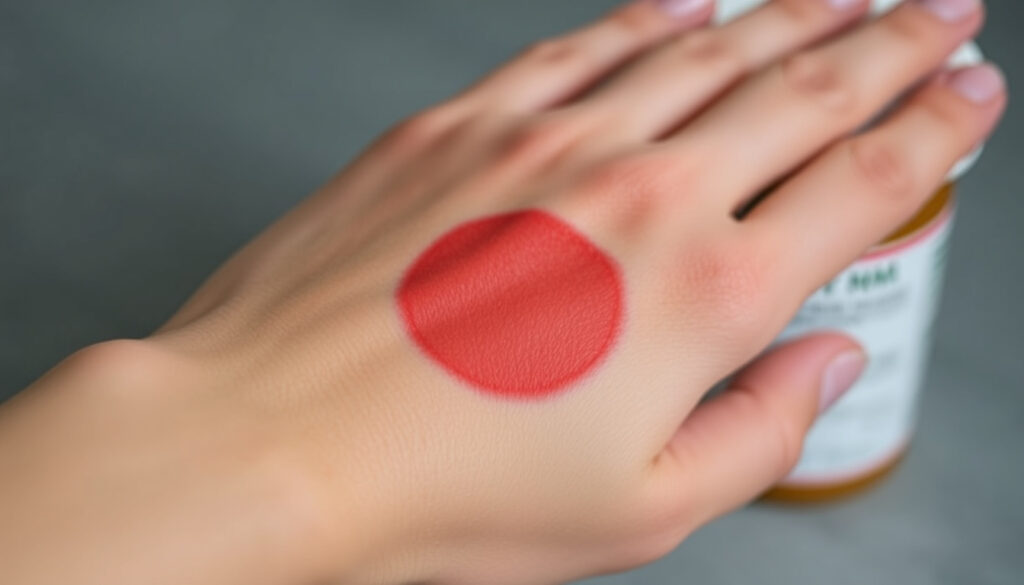
What does the Lyme disease rash look like?
- Erythema migrans, the hallmark rash, usually appears at the tick bite site within 3–30 days (CDC (U.S. public health authority)).
- The rash expands gradually over days and is often not painful or itchy (CDC (U.S. public health authority)).
- It can appear as a solid red patch or with the classic central clearing, giving a bull’s-eye appearance (Harvard Lyme Disease Initiative (academic research center)).
- The rash can be up to 12 inches across and may appear up to 3 months after the bite (CDC (U.S. public health authority)).
The implication: A rash that appears days after a tick exposure is highly specific for Lyme, but its absence does not rule out infection.
Which flu-like symptoms occur with early Lyme disease?
- Fever, chills, headache, and fatigue are among the earliest symptoms (CDC (U.S. public health authority)).
- Muscle and joint aches, plus swollen lymph nodes, are also common (CDC (U.S. public health authority)).
- The UK NHS adds fever, headache, muscle and joint pain, and tiredness to the list (NHS (U.K. national health service)).
- These symptoms begin 3 to 30 days after the tick bite (CDC (U.S. public health authority)).
The pattern: Early Lyme feels like “a mild flu” — which is precisely why many people mistake it for a virus and never seek a Lyme test.
The catch: Recognizing early Lyme requires linking non-specific symptoms to a tick exposure that may have happened weeks earlier.
What are four late symptoms of Lyme disease?
When Lyme goes untreated for weeks or months, the bacteria spread beyond the skin into the joints, nervous system, and heart. These late-stage symptoms are more dramatic and harder to dismiss.
What neurological symptoms can develop?
- Severe headaches and neck stiffness can signal meningitis from nervous system involvement (CDC (U.S. public health authority)).
- Facial palsy — loss of muscle tone on one or both sides of the face — is a classic neurologic sign (CDC (U.S. public health authority)).
- Numbness, tingling, or shooting pain in the hands or feet can occur (Mayo Clinic (leading U.S. medical center)).
- Meningitis symptoms such as photophobia and fever may appear (CDC (U.S. public health authority)).
The catch: Neurologic Lyme mimics other conditions like Bell’s palsy or multiple sclerosis, leading to misdiagnosis and delayed treatment.
What is Lyme arthritis?
- Lyme arthritis causes severe joint pain and swelling, most often in the knees (CDC (U.S. public health authority)).
- It typically appears weeks to months after initial infection (CDC (U.S. public health authority)).
- Untreated Lyme disease can lead to chronic joint inflammation and permanent cartilage damage (Mayo Clinic (leading U.S. medical center)).
A patient with Lyme arthritis who receives delayed treatment faces months of joint pain that could have been prevented with a two-week course of antibiotics given at the rash stage.
What this means: Late-stage Lyme often affects body systems in sequence — first joints, then nerves, then the heart. Lyme carditis, while rarer, produces heart palpitations and chest pain that require immediate medical attention (CDC (U.S. public health authority)).
The implication: A delay in recognizing late-stage Lyme allows further spread and complicates treatment.
How long can you have Lyme disease without knowing?
One of the most dangerous aspects of Lyme is that it can silently establish itself. The bacteria enter the body, begin replicating, and may produce no noticeable symptoms for weeks — or only vague ones that pass for everyday aches.
What is the incubation period?
- The incubation period from tick bite to first symptoms is 3 to 30 days (CDC (U.S. public health authority)).
- During this window, the Borrelia bacteria multiply at the tick bite site and begin spreading through the skin and blood (CDC (U.S. public health authority)).
Can early symptoms be mild or overlooked?
- Some people have no initial symptoms at all, especially if the rash is absent or on a hidden part of the body (CDC (U.S. public health authority)).
- Early symptoms like fatigue and headache are easily mistaken for stress, lack of sleep, or a viral infection (NHS (U.K. national health service)).
- Untreated, the infection spreads to joints, the heart, and the nervous system over weeks to months (Mayo Clinic (leading U.S. medical center)).
- Late-stage symptoms can appear months to years after the initial infection (CDC (U.S. public health authority)).
The trade-off: The silent period gives the bacteria a head start. A person who unknowingly harbors Lyme for months may arrive at the doctor’s office with arthritis or neurologic symptoms, not the classic rash — and the diagnosis becomes harder to confirm.
What happens if Lyme disease goes untreated for 20 years?
This question reflects a very real fear, and the medical reality is sobering. Decades of untreated Lyme disease can cause irreversible damage, though the course varies dramatically between patients.
Can untreated Lyme disease cause permanent damage?
- Untreated Lyme disease can lead to chronic arthritis with joint erosion, neurological deficits, and cognitive impairment (CDC (U.S. public health authority)).
- The late disseminated stage can include debilitating fatigue, memory problems, and nerve pain that interferes with daily life (Mayo Clinic (leading U.S. medical center)).
- Severe cases can be fatal due to cardiac complications like complete heart block or neurologic complications (CDC (U.S. public health authority)).
What is post-treatment Lyme disease syndrome (PTLDS)?
- PTLDS refers to persistent symptoms such as fatigue, pain, and cognitive complaints that continue after a standard course of antibiotics (CDC (U.S. public health authority)).
- The cause is not fully understood, and optimal treatment duration remains an area of active research (IDSA (Infectious Diseases Society of America)).
- Some patients experience these symptoms for months or years after treatment, though the infection is cleared (Mayo Clinic (leading U.S. medical center)).
A patient who experiences unexplained arthritis, memory lapses, or persistent fatigue years after potential tick exposure should raise the possibility of Lyme with a physician — especially if they live or have traveled to endemic regions.
Why this matters: The patient who waits decades faces a vastly different outcome than the one treated in the first weeks. For those with untreated Lyme, the consequences are not hypothetical — they affect the ability to work, walk, and think clearly.
Can a blood test detect Lyme disease years later?
Blood tests for Lyme are more reliable for confirming past infection than for catching early disease. This creates a paradox: the test works best when you need it least.
How accurate are Lyme blood tests over time?
- The two-tier blood test (ELISA followed by Western blot) is the CDC-recommended standard (CDC (U.S. public health authority)).
- Serology can remain positive for years after infection, but does not distinguish between active disease and past exposure (CDC (U.S. public health authority)).
- False negatives are common in the first 4–6 weeks because antibodies take time to develop (CDC (U.S. public health authority)).
When should you be tested for Lyme disease?
- For patients with a typical erythema migrans rash, the IDSA recommends clinical diagnosis without blood testing (IDSA (Infectious Diseases Society of America)).
- For patients without a rash, testing is most reliable 4–6 weeks after the suspected bite (Mayo Clinic (leading U.S. medical center)).
- Clinical diagnosis based on symptoms and exposure history remains crucial, especially in early disease (NHS (U.K. national health service)).
The implication: A negative blood test in the first month after a tick bite does not rule out Lyme. A positive test years later confirms you had the infection, but cannot tell you whether it is still active.
The pattern: Test timing determines reliability — early negatives are common, late positives are unhelpful for guiding treatment decisions.
Timeline: How Lyme disease progresses from tick bite to late-stage
Early localized stage: Erythema migrans rash appears at bite site in 70–80% of cases. Flu-like symptoms (fever, chills, headache, fatigue) begin (CDC (U.S. public health authority)).
Early disseminated stage: Multiple rashes, neurologic symptoms (facial palsy, meningitis), and heart involvement (Lyme carditis) can occur (CDC (U.S. public health authority)).
Late disseminated stage: Lyme arthritis (especially knees), chronic neurological issues, and cognitive decline may appear (CDC (U.S. public health authority)).
Confirmed vs. unclear: What we know and what remains uncertain
The medical community has strong evidence for some aspects of Lyme disease, while other areas remain open questions.
Confirmed facts
- Erythema migrans rash is specific to Lyme disease but is not always present (CDC (U.S. public health authority))
- Early antibiotic treatment cures the vast majority of patients (CDC (U.S. public health authority))
- Two-tier blood test is recommended by CDC for diagnosis after 4–6 weeks (CDC (U.S. public health authority))
- Untreated infection can cause severe joint and neurological damage (CDC (U.S. public health authority))
What’s unclear
- Whether chronic Lyme disease is distinct from post-treatment Lyme disease syndrome (CDC (U.S. public health authority))
- Optimal duration of antibiotic therapy for persistent symptoms (IDSA (Infectious Diseases Society of America))
- Precise incidence of long-term complications in untreated populations (Mayo Clinic (leading U.S. medical center))
Expert perspectives on Lyme disease symptoms
“The classic rash, erythema migrans, appears in 70 to 80 percent of infected people.”
— CDC (U.S. public health authority)
“Early diagnosis and treatment are critical to prevent late-stage complications.”
— Mayo Clinic (leading U.S. medical center)
“Symptoms can include a high temperature, headache, muscle and joint pain, and tiredness.”
— NHS (U.K. national health service)
The takeaway from three authoritative sources: While the classic rash is the most specific signal, the absence of a rash should never be interpreted as absence of disease, especially in a person with known tick exposure.
Summary: What this means for your health
Lyme disease is a treatable infection, but only if caught early. The symptoms progress along a predictable timeline, but the classic rash — the clearest early warning — is missing in roughly one in four cases. For the person who lives in or travels to a tick-endemic area, awareness of the full symptom spectrum matters more than any single test result. The decision to seek medical attention after a tick bite or unexplained flu-like illness is the single most powerful lever a patient has against Lyme’s worst outcomes. Waiting for a rash or a positive blood test can mean the difference between a two-week course of antibiotics and years of complications.
For the patient in an endemic region, the path is clear: know the symptoms, check for ticks, and see a doctor early — or risk discovering what happens when Lyme goes untreated for too long.
idsociety.org, gov.uk, bayarealyme.org, academic.oup.com, pubmed.ncbi.nlm.nih.gov, cps.scot
Frequently asked questions
Can you live a normal life with Lyme disease?
Most people treated early with antibiotics recover fully and return to normal activities. For those who develop late-stage complications or PTLDS, quality of life can be affected, but many manage symptoms with medical support (CDC (U.S. public health authority)).
What are 5 surprising symptoms of Lyme disease?
Beyond the classic signs, some patients experience (1) heart palpitations from Lyme carditis, (2) shooting nerve pain, (3) memory lapses and brain fog, (4) mood changes such as irritability, and (5) sleep disturbances. These symptoms often lead to misdiagnosis (Mayo Clinic (leading U.S. medical center)).
What is commonly mistaken for Lyme disease?
Conditions that mimic Lyme include fibromyalgia, chronic fatigue syndrome, multiple sclerosis, rheumatoid arthritis, and even depression. The shared symptoms — fatigue, joint pain, cognitive issues — overlap heavily (NHS (U.K. national health service)).
Can Lyme disease kill you?
Rarely, Lyme can be fatal due to cardiac complications (complete heart block from Lyme carditis) or severe neurologic involvement. Death is extremely uncommon with proper treatment (CDC (U.S. public health authority)).
Is Lyme disease curable?
Yes, with standard antibiotic therapy, most cases of early Lyme disease are curable. The IDSA recommends a 10–21 day course of antibiotics for early localized disease. Late-stage disease may require longer treatment but is also typically curable in terms of clearing the infection (IDSA (Infectious Diseases Society of America)).
More related posts
 St James Hospital Dublin: Services, Departments, and Contact Info
 Birth Flowers for Each Month: Lists, Meanings & More
 La Marzocco Coffee Machine: Price, Models, and Why It’s Expensive
 Bitcoin Price USD Today: Live BTC at $62,421 (Market Cap $1.3T)
 At The Races Quick Results: Fast Horse Racing Today
 Eid al-Fitr 2026: Meaning, Celebration & Forbidden Act
 Galaxy A50s to Buy: Ireland Deals, Reviews & Value
 What Does CC Mean in an Email? Definition & Etiquette
