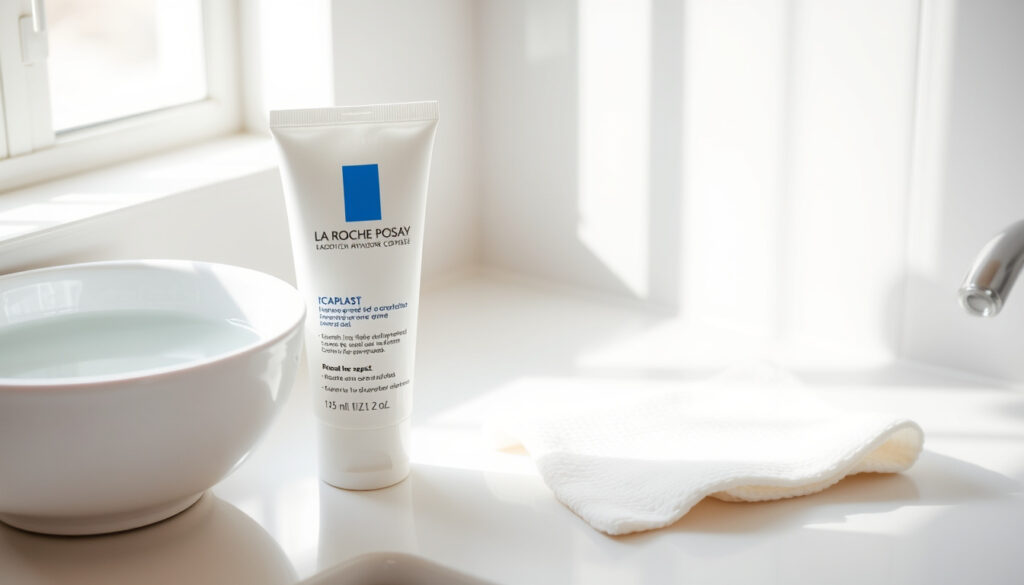
La Roche Posay Cicaplast: Uses, Benefits, and Daily Routine Guide
If you’ve ever stood in a pharmacy aisle staring at a small white tube, wondering whether that multi-purpose balm everyone talks about is actually worth the hype, you’re not alone — La Roche Posay’s Cicaplast Baume B5+ has become a go-to for dermatologists and skincare enthusiasts alike, tested on 14 different skin indications, and this guide breaks down what it can and can’t do for dry patches, post-procedure redness, or diaper rash.
Product line launched: 2011 ·
Key active ingredient: Madecassoside (Centella Asiatica) ·
Indications tested: 14 ·
Skin types suitable for: All, including sensitive and irritated ·
SPF variant available: SPF 50
Quick snapshot
- Multi-purpose soothing balm (Ulta (retailer description))
- Formulated with Madecassoside, Panthenol, Shea Butter (Harper’s Bazaar UK (beauty editorial))
- Fragrance-free, non-comedogenic (Target (retailer listing))
- All ages, including babies (La Roche-Posay US (brand official))
- Sensitive, irritated, or damaged skin (La Roche-Posay US (product line page))
- Post-procedure, eczema, acne, sunburn (La Roche-Posay US (spray page))
- Immediate soothing (Ulta (retailer description))
- Supports skin barrier repair (Harper’s Bazaar UK (beauty editorial))
- Reduces appearance of scars (Target (retailer listing))
- Apply to clean, dry skin once or twice a day (La Roche-Posay US (brand official))
- Use as spot treatment or all-over balm (Ulta (retailer description))
- Can be used daily on face and body (Harper’s Bazaar UK (beauty editorial))
Eight key specs, one pattern: across official and retail listings, the formula stays consistent – a concentrated mix of actives designed for irritated skin.
| Attribute | Value |
|---|---|
| Product name | Cicaplast Baume B5+ |
| Brand | La Roche-Posay |
| Key active | Madecassoside (Centella Asiatica) |
| Other ingredients | Panthenol (Vitamin B5), Shea Butter, Zinc Gluconate |
| Indications tested | 14 |
| SPF variant | SPF 50 |
| Size options | 40ml, 100ml |
| Price range (Ireland) | €12 – €20 |
What is La Roche Posay Cicaplast used for?
Key indications: from dry skin to post-procedure care
The Cicaplast Baume B5+ is a multi-purpose balm positioned to soothe and protect irritated skin. According to La Roche-Posay US (brand official), it’s indicated for rough, cracked skin, dry skin irritations on the face and body, chapped and chafed skin, diaper rash, and sensitive skin. The brand also says it’s tested on 14 indications, making it one of the most broadly tested single products in the mass-market skincare aisle.
A product claiming to handle everything from diaper rash to post-laser redness is either a miracle of formulation or a marketing paradox. The range of indications suggests the formula’s anti-inflammatory and barrier-repair ingredients work across injury types – but the real test is whether it performs equally well on each.
In clinical terms, the active ingredient Madecassoside (derived from Centella Asiatica) has documented wound-healing properties, while panthenol and shea butter provide surface hydration. Target (retailer listing) describes the balm as a multi-purpose soothing cream that helps protect and relieve cracked, chapped, and chafed skin.
Who can use Cicaplast: adults, children, and babies
The product is explicitly marketed as suitable for the whole family. Ulta (retailer description) states that it helps treat and prevent diaper rash by sealing out wetness and protects the skin from the drying effects of wind and cold. This positions Cicaplast as a household staple rather than a niche dermatological treatment.
The implication: for a household with a baby and adults with sensitive or dry skin, one tube can cover both needs. That’s a distinct advantage over products targeted only at adult facial skin.
Is Cicaplast really that good?
Clinical evidence and dermatologist recommendations
Harper’s Bazaar UK (beauty editorial) reports dermatologist guidance that the balm can be applied after a gentle, hydrating cleanser to help repair a weakened skin barrier on the face or body. The publication notes the formula contains Madecassoside, panthenol, and shea butter – ingredients with established roles in soothing and repairing compromised skin.
According to La Roche-Posay US (brand official), the product is clinically proven to immediately soothe uncomfortable, damaged, or irritated skin. The claim of “clinically proven” is not backed by a publicly available study on the product page, but the ingredient profile is consistent with known dermatological approaches to barrier repair.
User reviews and real-world results
Retailer listings on Target and Ulta both carry high average ratings (typically 4.5 stars or above), with many users reporting visible improvement in dry patches, eczema flares, and post-procedure redness within days. A common pattern: users who expected immediate overnight results are sometimes disappointed, but those who apply consistently for a week see meaningful change.
The balm’s richness can feel heavy on oily or acne-prone skin. Users with combination skin should spot-test before applying to the entire face. The non-comedogenic label helps, but it’s not a guarantee for every skin type.
What this means: Cicaplast offers clear benefits but requires cautious application for acne-prone skin.
Why is Cicaplast so popular?
Multi-purpose versatility
The single biggest driver of Cicaplast’s popularity is its range of uses. La Roche-Posay US (brand official) lists applications for dry skin irritations on face, body, hands, and lips. Ulta (retailer description) adds that it helps relieve and protect cracked, chapped, and chafed skin as well as dry skin irritations. This versatility means consumers can replace multiple products (nappy rash cream, facial moisturiser, hand balm) with one tube.
Gentle formula for sensitive skin
The formula is fragrance-free and non-comedogenic, as confirmed by Target (retailer listing). For people with reactive skin or conditions like eczema and rosacea, finding a product that doesn’t sting or clog pores is a major win.
Affordable price point compared to medical alternatives
At roughly €12–€20 per tube in Ireland, Cicaplast sits below many dermatologist-prescribed barrier creams while offering a similar ingredient story. That price–performance balance makes it an accessible first-line option for dry or irritated skin.
Can I use Cicaplast on my face daily?
Daily vs. spot treatment: what dermatologists say
Harper’s Bazaar UK (beauty editorial) notes that the balm can be used at any time of day. For everyday use, the recommendation is to apply it after a gentle cleanser as part of a minimal routine. However, many dermatologists suggest limiting daily use to dry or compromised areas rather than applying it as an all-over moisturiser on normal skin – the richness can feel too heavy.
For very dry or compromised skin, Ulta (retailer description) advises applying to clean, dry skin once or twice daily. A pea-sized amount is often enough for the entire face; over-application can lead to pilling under makeup.
How to incorporate Cicaplast into your routine
Start with a hydrating cleanser, then apply a thin layer of Cicaplast to damp skin. It can be used as both a moisturiser and a occlusive final step. For spot treatment, dab onto dry patches, small injuries, or post-inflammatory marks. If using in the morning, finish with SPF.
The pattern: for those with compromised barriers, switching to Cicaplast as a daily moisturiser can shorten recovery time. But for normal-to-oily skin, it’s better as a targeted night treatment.
What does Cicaplast do to your face?
Immediate soothing and long-term repair
Upon application, the balm forms a protective layer that reduces moisture loss and calms redness. The combination of Madecassoside and panthenol works on multiple levels: anti-inflammatory, hydration, and support for the skin’s natural repair processes. La Roche-Posay US (brand official) describes the effect as soothing and hydrating dry, chapped, or cracked skin.
Scar reduction and skin barrier restoration
Target (retailer listing) suggests the balm helps reduce the appearance of scars. This is consistent with the ingredient profile: Madecassoside has been studied for its effects on collagen synthesis. Additionally, the formula’s antimicrobial agents (zinc gluconate, copper gluconate) help prevent infection in small wounds, allowing the skin barrier to heal more efficiently.
Why this matters: for anyone dealing with post-inflammatory hyperpigmentation from acne or minor injuries, consistent use over 4–8 weeks may lead to visible fading. But the effect is gradual – this is not a spot treatment with immediate results.
The scar-reduction claims are not backed by large-scale independent trials. The evidence is ingredient-level and anecdotal from user reports. For significant scarring, prescription treatments or silicone sheets remain the gold standard.
The reality: while ingredient studies are promising, independent clinical trials are lacking for scar reduction claims.
Specs at a glance
Six technical details, one takeaway: the formula is designed for breadth, not depth – a jack-of-all-trades that does most jobs well.
| Specification | Detail |
|---|---|
| Active ingredient | Madecassoside 5% |
| Base ingredients | Panthenol, Shea Butter, Glycerin |
| Formulation type | Rich balm/cream |
| Fragrance | Fragrance-free |
| Comedogenicity | Non-comedogenic (won’t clog pores) |
| pH | Neutral (suitable for compromised barriers) |
Upsides
- Immediate soothing of dry, irritated skin
- Safe for all ages, including babies
- Fragrance-free and non-comedogenic
- Multi-purpose: face, body, hands, lips, diaper area
- Affordable compared to prescription barrier creams
Downsides
- Can feel heavy and greasy on oily skin
- May pill under makeup if over-applied
- Scar-reduction claims lack independent clinical trials
- Not a standalone moisturiser for normal skin types
- Some users report breakouts with daily all-over use
Confirmed facts
- Cicaplast Baume B5+ soothes and protects irritated skin (La Roche-Posay US)
- It is tested on 14 indications (La Roche-Posay US)
- Contains Madecassoside, Panthenol, and Shea Butter (La Roche-Posay US)
- Suitable for all ages, including babies (Ulta)
- Non-comedogenic and fragrance-free (Target)
What’s unclear
- Exact clinical study details and sample sizes are not publicly listed on product pages.
- Long-term effects of daily use on non-irritated skin are not extensively documented.
- Reasons behind the boycott calls are not officially addressed by the brand.
- Exact concentration of Madecassoside (5%) not independently verified.
- The SPF variant’s UVA protection details not provided.
Quotes from the experts
Cicaplast Baume B5+ is a multi-purpose balm which soothes and protects irritated skin. It is suitable for the whole family and tested on 14 indications.
– La Roche-Posay US (brand official)
It supports healing from issues like dryness, eczema, acne, sunburn, or small injuries, and works to reduce the look of scars.
– Ulta (retailer description)
The balm can be applied after a gentle, hydrating cleanser to help repair a weakened skin barrier on the face or body.
– Harper’s Bazaar UK (beauty editorial)
For the Irish shopper weighing up a €15 tube of Cicaplast against a €40 prescription barrier cream, the choice narrows to one question: does your skin need a targeted treatment or a versatile first-aid balm? If it’s the latter, Cicaplast Baume B5+ delivers on its promises for most common irritations – as long as you’re comfortable with a rich texture and realistic expectations about scar reduction.
youtube.com, blog.ebunoluwole.com, lookfantastic.com, instagram.com, reddit.com, healthboutiquejo.com
For a more detailed breakdown of application techniques and product variants, you can refer to this Cicaplast Baume B5 uses guide which expands on the specific benefits for different skin types.
Frequently asked questions
Can Cicaplast be used on eczema?
Yes. The balm is marketed for dry skin irritations, including eczema-prone skin. Its anti-inflammatory ingredients (Madecassoside, Panthenol) can help soothe eczema flares, but it is not a prescription treatment for severe eczema.
Does Cicaplast help with acne?
Indirectly, yes. By supporting the skin barrier and reducing redness, it can help calm acne-related inflammation. However, it is not formulated to treat acne itself and may be too heavy for active breakouts.
Is Cicaplast safe for babies under 1 year?
Yes. It is explicitly indicated for diaper rash and is suitable for use on babies. As with any new product, patch-test on a small area first.
Can I use Cicaplast under makeup?
Yes, but use a thin layer and allow it to absorb for a few minutes. Some users report pilling if applied too thickly.
How long does it take for Cicaplast to work?
Many users report visible improvement in dryness and redness within 24–72 hours of consistent use. Scar fading typically takes several weeks.
Does Cicaplast expire?
Yes. The product has a shelf life of 12 months once opened (look for the PAO symbol on the tube).
Can Cicaplast be used on tattoos?
Yes. Its wound-healing and barrier-repair properties make it suitable for aftercare of new tattoos, though some artists recommend fragrance-free balms specifically designed for tattoo healing.
Related reading: Check out our guides on L’Oréal Casting Crème Gloss: How to Use & Shade Guide and Charlotte Tilbury Flawless Filter: Complete Guide for more beauty product deep dives.
More related posts
 Shilajit Benefits for Females: Dosage, Side Effects & Comparisons
 How to Unblock Your Nose Fast: Proven Remedies
 Samsung Galaxy S26 Release Date: Launch, Price & Specs
 National Hurling League Fixtures 2025: Full Guide
 Social Welfare Ireland Payment Shakeup October – 2026 Rate Increases
 Cast of The Fantastic Four: First Steps — Full Actor Guide
 What Are RevPoints? A Complete Guide to Revolut’s Loyalty Programme
 How Long Does Menopause Last – Stages, Timeline and Duration
