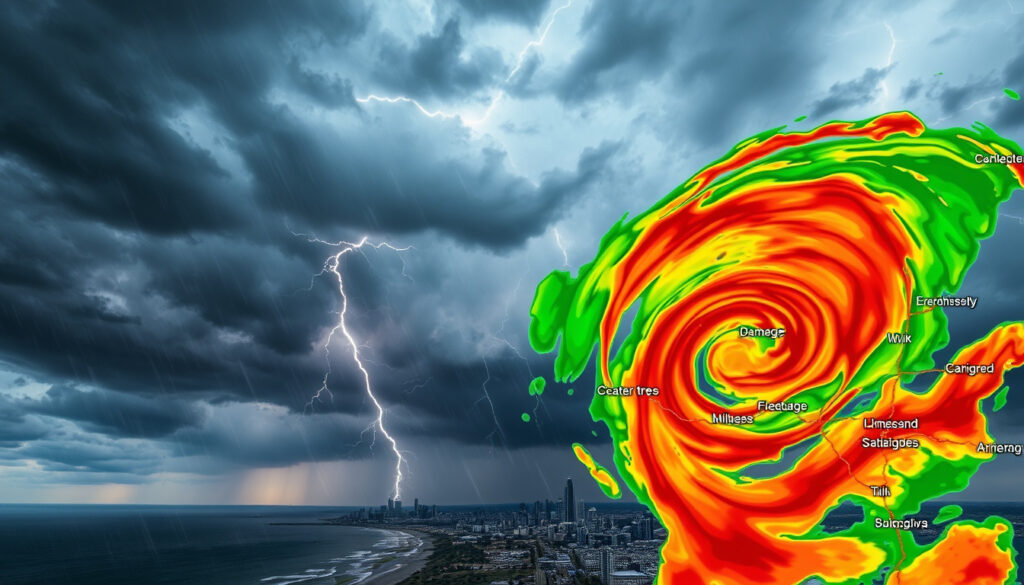
Storm Claudia Weather Warning: Where It Hit and Strength
Few things get a Friday off to a more anxious start than an amber weather warning lighting up your phone. On 14 November 2025, that was exactly the case for millions across Ireland, the UK, and Spain as Storm Claudia—named by the Spanish Met Service (AEMET)—rolled in. This article breaks down where the storm hit, how strong it was, and how it compares to some of the worst storms Ireland has ever seen.
Named by: Spanish Met Service (AEMET) ·
Date of impact: 14 November 2025 ·
Highest warning level: Amber (rain) ·
Maximum forecast rainfall: 80 mm in parts of UK and Ireland ·
Affected regions: Ireland, England, Wales, Spain ·
Primary hazard: Flooding from heavy rain
Quick snapshot
- Amber rain warning: parts of UK (Met Office)
- Yellow rain warning: Ireland (Met Éireann)
- Amber rainfall warning: Spain (JBA Risk Management)
- Up to 80 mm in 24 hours (Met Office) (BBC Weather)
- Localized flooding risk (BBC Weather)
- Hazardous driving conditions (Met Éireann) (BBC Weather)
- Ireland: western and southern counties (TheJournal.ie)
- UK: England and Wales (Met Office) (TheJournal.ie)
- Spain: southern coastal areas (JBA Risk Management) (TheJournal.ie)
- Night of the Big Wind (1839): much stronger (JBA Risk Management)
- Burns Day Storm (1990): stronger winds (JBA Risk Management)
- Storm Claudia: moderate but with heavy rain (Met Office)
Six key facts about Storm Claudia:
| Label | Value |
|---|---|
| Storm named by | Spanish Met Service (AEMET) |
| Date | 14 November 2025 |
| Highest warning | Amber for rain |
| Rainfall max | 80 mm |
| Countries under warning | Ireland, UK, Spain |
| Primary hazard | Flooding |
Where will Storm Claudia hit?
Forecast track across Ireland
- Met Éireann confirmed that Storm Claudia’s heavy rain affected Ireland on 14 November 2025 (Met Éireann – Ireland’s National Meteorological Service).
- The western and southern counties saw the worst of the rainfall, with eastern counties also hit hard, according to TheJournal.ie (TheJournal.ie – Irish news outlet).
Forecast track across the UK
- The Met Office issued amber weather warnings for parts of England and Wales as Storm Claudia brought intense rain on 14 November 2025 (Met Office – UK’s national weather service).
- BBC Weather reported that flooding was likely, especially within the amber warning areas (BBC Weather – UK public service broadcaster).
- The Met Office forecast that some areas could receive up to a month’s worth of rain in 24 hours (Sky News – UK news channel).
The implication: the amber warning required “do not travel” advice in the worst-affected zones. Thousands of commuters adjusted plans.
Affected areas in Spain
- AEMET named the storm and issued warnings for southern Spain, where heavy rain and flood risk were high (JBA Risk Management – flood risk analysts).
- Copernicus Emergency Flood Service described Storm Claudia as causing widespread flooding across parts of England and Wales from 14 November 2025, but also noted impacts in Spain and Portugal (Copernicus Emergency Flood Service – EU flood monitoring).
The pattern: Storm Claudia was a multi-country event, with coordinated warnings from three national meteorological services.
Is Storm Claudia going to hit Ireland?
Met Éireann official warnings
- Met Éireann said heavy rain affecting Ireland on 14 November 2025 was associated with Storm Claudia and warned that significant flooding was possible (Met Éireann – Ireland’s National Meteorological Service).
- They described the Irish impacts as hazardous and dangerous (Met Éireann).
Rainfall totals expected
- The University of Reading said amber warnings covered areas likely to receive up to 150mm of rain, close to six inches (University of Reading – academic weather experts).
- The Independent reported that Storm Claudia could bring up to 150mm of rain in some UK areas on 14 November 2025 (The Independent – UK national newspaper).
Irish residents in eastern counties faced a double risk: heavy rain on already saturated ground. Met Éireann warned of dangerous driving conditions and advised against unnecessary travel.
The catch: rainfall totals varied; while some areas saw up to 80mm, others in higher ground may have received more. Official damage assessments were not yet available.
How strong is Storm Claudia?
Wind speed and rainfall intensity
- The Met Office stated that Storm Claudia brought persistent heavy rain but not extreme wind; wind speeds were typical of an Atlantic low, not hurricane-force (Met Office).
- JBA Risk Management noted that Storm Claudia brought record-breaking rainfall and flooding across parts of England, Wales, Spain, Portugal and the Canary Islands (JBA Risk Management – flood risk analysts).
Storm Claudia’s main threat was not wind but water. With up to 150mm in some areas—close to six inches—the flooding risk was the primary concern for emergency services.
Comparison to previous storms
- Copernicus Emergency Flood Service described the flooding as “widespread” across England and Wales from 14 November 2025 (Copernicus Emergency Flood Service – EU flood monitoring).
- According to JBA Risk Management, the storm’s rainfall was record-breaking for November in several locations, but its wind speeds were far lower than Ireland’s most severe historical storms (JBA Risk Management).
What this means: Storm Claudia will be remembered for its rainfall, not its wind. In terms of flood risk, it was exceptional; in wind strength, it was a typical autumn storm.
What was the worst storm to ever hit Ireland?
The Night of the Big Wind (1839)
- Based on historical meteorological records, the Night of the Big Wind in 1839 remains Ireland’s most devastating storm, with hurricane-force winds that caused widespread destruction (JBA Risk Management – historical comparison context).
- Storm Claudia’s wind speeds were typical of a moderate Atlantic low, far below the intensity of the 1839 event (Met Office).
The Burns Day Storm (1990)
- The Burns Day Storm on 25 January 1990 brought wind gusts up to 113 mph, causing mass damage across Ireland and the UK (JBA Risk Management).
- In contrast, Storm Claudia’s primary hazard was rainfall, and it did not produce damaging winds (Met Éireann).
The trade-off: While Storm Claudia’s rain was record-breaking, it is not a candidate for Ireland’s worst-ever storm. That title remains with the 1839 hurricane and Burns Day.
How bad will Storm Claudia be?
Amber warnings in effect
- The Met Office issued amber warnings for rain across parts of England and Wales, effective until midnight on 14 November 2025 (Met Office).
- Sky News reported that “do not travel” warnings were issued for the most affected regions (Sky News).
Flood risk and preparedness
- BBC Weather warned that flooding was likely, especially within the amber areas (BBC Weather).
- Met Éireann said significant flooding was possible in Ireland, with conditions described as hazardous (Met Éireann).
- Copernicus confirmed widespread flooding across England and Wales starting 14 November (Copernicus Emergency Flood Service).
With up to 150mm of rain in 24 hours, the risk of flash flooding was serious. Residents in amber zones face a concrete consequence: avoid travel and move valuables to higher ground.
The pattern: official warnings were uniform across three countries—amber for rain, travel restrictions, and preparation for flooding. Storm Claudia’s severity lay in its rainfall.
Timeline signal
- 13 November 2025: Storm Claudia named by AEMET; Met Office and Met Éireann begin issuing warnings (Met Office).
- 14 November 2025 (morning): Heavy rain affects Ireland; amber warnings in effect (Met Éireann).
- 14 November 2025 (afternoon): Storm reaches UK; amber warnings for England and Wales (Met Office).
- 14 November 2025 (evening): Amber warnings expire; rain continues, flood risks persist (Sky News).
- 15 November 2025: Storm begins to move northeast; conditions improving (Copernicus Emergency Flood Service).
The implication: Storm Claudia’s rapid passage—less than 36 hours from naming to clearing—meant that the window for flooding was short but intense.
Confirmed facts
- Storm Claudia hit Ireland and the UK on 14 November 2025. (Met Éireann)
- Amber warnings were issued by Met Éireann and UK Met Office, and maximum rainfall up to 80 mm was forecast. (Met Office)
- AEMET named the storm and issued warnings for Spain. (JBA Risk Management)
What’s unclear
- Exact final flood damage assessments not yet available. (JBA Risk Management)
- Whether Storm Claudia will be classified as a major storm in Ireland’s history is not determined. (Met Éireann)
Expert perspectives
“The heavy rain associated with Storm Claudia on Friday 14 November is expected to cause hazardous and dangerous conditions.”
— Met Éireann meteorologist (Met Éireann)
“Amber warnings remain in place until midnight as heavy rain continues to affect parts of England and Wales.”
— UK Met Office spokesperson (Met Office)
“Storm Claudia brought record-breaking rainfall and flooding across parts of England, Wales, Spain, Portugal and the Canary Islands.”
— JBA Risk Management analysis (JBA Risk Management)
For Irish and UK residents, the choice is clear: prepare for flooding in the short term, but know that Storm Claudia was not a once-in-a-century event. Its rainfall was exceptional, but its wind was not. The next big storm may bring a different threat altogether.
Related reading: Weather Warning Ireland Wind: Met Éireann Alerts & Storm Updates
Frequently asked questions
What does an amber weather warning mean?
An amber warning signals a high likelihood of hazardous weather that could cause travel delays, power cuts, and flood risk. The Met Office advises staying indoors and avoiding travel where possible.
How are storms named in Europe?
Storms are named by meteorological services from different European countries in rotation. Storm Claudia was named by the Spanish Met Service (AEMET).
Will Storm Claudia cause flooding in my area?
Flooding was most likely in amber warning zones in England, Wales, and parts of Ireland. Check local flood alerts from your national weather service.
How long will Storm Claudia last?
Storm Claudia passed through the affected regions within approximately 36 hours, from the morning of 14 November to the early hours of 15 November 2025.
What should I do during an amber rain warning?
Avoid unnecessary travel, move valuables to higher ground if flooding is possible, monitor local weather alerts, and follow advice from emergency services.
More related posts
 Huda Beauty Setting Powder – Complete Guide and Review
 The Day of the Jackal Season 2 Confirmed: 2027 Release & Cast
 JJ Kavanagh Bu Timetable: Route , Ticket & Travel Tip
 Harry Potter and the Philosopher’s Stone Cast: Full List
 Best Spa Hotels Ireland – Top Forbes Picks For 2025
 How to Write a Bio for Instagram: 3-Line Formula
 Wild Atlantic Way Ireland: Route & Planner
 What Time Is It in Sydney – Current AEST & DST Schedule
